NH #792: THE MOTH – Award-Winning Post-Nuclear-Apocalypse Film from First Nations Perspective – Michelle Derosier, Zoe Gordon
NH #792: THE MOTH – Award-Winning Post-Nuclear-Apocalypse Film from First Nations Perspective – Michelle Derosier, Zoe Gordon
Episode transcript
Libbe HaLevy: Nuclear waste. Nuclear bribery. When a First Nations community in Canada is targeted by not only the nuclear industry, but by their own government to become the dumping ground for all the high-level radioactive nuclear waste in the country, you'd expect there to be an outcry from the locals, community solidarity opposing the desecration of land, water, life. But that would be without reckoning with the deep pockets, malign intent, and good old-fashioned greed of the nuclear industry salivating at the prospect of a forever financial windfall if they can only fob off their waste problem on people with few resources to fight back. The nuke-sters know that compliance with even the worst of their ideas can be manipulated by strategically distributing money, and it takes a genuine expert, someone who lives in the community and understands exactly what is going on to explain, and she tells you... Michelle Derosier
Libbe HaLevy: the community, the First Nation itself, has now very recently received every member a lot of money from the Nuclear Waste Management Organization, which has completely devastated communities' relationships. You know, even if you actually were a no, if somebody gives you $145,000, drops $145,000 on your lap when you are poor and have been historically poor, that changes everything. And a lot of organizations, even social organizations you think that have a social conscience, that are activists sort of in nature, grassroots organizations, there's been a lot of people that have taken the money. They've drank the Kool- Aid. Everybody's drinking the nuclear Kool-Aid right now in Northwestern Ontario. Libbe HaLevy Well, when an Anishinaabe mother, grandmother, artist, activist, and filmmaker, Michelle Derosier, explains what is happening to terminally co-opt her Northern Ontario community and then shares about the film she and producing partner Zoe Gordon created to make people aware of the consequences should that radioactive waste dump go forward, you are being brought up close and personal with that awful, deadly, dangerous seat that we all share.
Nuclear Hotseat Theme: Nuclear Hotseat. What are those people thinking? Nuclear Hotseat. What have those boys been drinking? Nuclear Hotseat. The corium is sinking. Our time to act is shrinking, but our activists are linking. Nuclear Hotseat. It's da bomb
Libbe HaLevy: Welcome to Nuclear Hotseat, the weekly international news magazine keeping you up to date on all things nuclear from a different perspective. We're a show for people who know nothing about nuclear who want to know something, and people who know something about nuclear who would like to know just a little bit more. My name is H I am the producer and host, as well as a survivor of the nuclear accident at Three Mile Island from just one mile away, so I know what can happen when those nuclear so-called experts get it wrong This week, we talk with the women behind the award-winning short film, The Moth. First Nations filmmakers Michelle Derosier and Zoe Gordon on the issues facing the people of Northern Ontario as nuclear interests and the government are determined to use their lands as the repository for all the high-level radioactive nuclear waste in Canada. Their film, The Moth, is a cautionary tale of survival in the wake of disaster, and one Native woman who refuses to evacuate. We will also have nuclear news from around the world, Linda Pentz Gunter with the Nuclear Hotseat Hot Story, and lots more honest and verifiable nuclear information, all of it coming up in just a few moments. Today is Tuesday, September 1st, 2026, and here is this week's nuclear news from a different perspective. Here in the US, government, military, and corporate interests continue to treat small modular nuclear reactors as though they already exist when they don't. None has ever been built, which means no prototype has ever been tested, and the one design that did get approved from the Nuclear Regulatory Commission had that license rescinded when the company behind it crunched the numbers and realized that they couldn't make money off of something that small, so they changed the design without getting further approval. Despite that, the Pentagon has announced that it aims to bring ad... what they've been trained to call advanced, put that in quotes, nuclear technology online for military applications as soon as 2028, which is only a year and a half from now. Then they plan to swiftly commercialize it to reduce development timelines and lower costs. The two things you never want to hear in connection with anything nuclear is faster and cheaper. This article, which appeared in National Defense magazine, is pure poppycock and hot air. The special HALEU, H-A-L-E-U, high assay low enriched uranium fuel required for these mini monsters has been labeled, quote, "rare as diamonds," end quote, according to Financial Times magazine. And as for that hot air, the hissing sound you're hearing is all the air going out of the new reactor hot air hype balloon. Here's the always excellent Linda Pentz Gunter between trips to promote her new book with this week's very hot Nuclear Hotseat Hot Story.
Linda Pentz Gunter: It isn't exactly going well these days for the small modular reactor hot air balloon guys, no matter how inflated their rhetoric. That hissing sound you're hearing is due to some pretty painful realities. Here's a recent headline from the Financial Times. Short sellers reap $2 billion profit as modular nuclear reactor stocks tumble. Deep Vision wasn't one of the startups affected, but a headline when that company, which plans to bury its micro reactors down a mile deep borehole, went public. Deep Vision, F-I-S-N, a mile deep and already underwater. What happened last week was that short sellers predicting that the hype cycle around SMRs was about to collapse placed their bets before the fall and hauled in more than $2 billion. The companies they bet against were New Scale Power, Nano Nuclear, and Oklo. And the reason they were vulnerable is that, well, they are bleeding money and have zero revenue. No profits, no customers, no reactors. It's a scam I've been calling crypto nukes, but the events of last week revised that thinking. It's more like the subprime mortgage debacle that unfolded between 2007 and 2010. If your eyes are already crossing, I highly recommend watching or rewatching the excellent feature film made about the subprime scandal called The Big Short. It tells the true story of a handful of financial outsiders who realized that the US housing market was propped up on bad loans doomed to fail. By betting against those loans, the short of the title, before the market collapsed, they made themselves small fortunes. The film makes the whole messy subject understandable. It's also highly entertaining and brilliantly acted. NuScale, Nano-Nuclear, and Oklo are likely just the first to fall, and they may pick themselves up from the dirt and keep fighting. After all, they and the nearly 80 other small or microreactor companies are all playing with other people's money, either ours or that of venture capitalists, who are surely going to start to get jittery about now. As the Financial Times reported, "A total of $30.3 billion has been wiped off their collective market value since their peak in October last year amid growing concerns over the lack of immediate revenue and the long build-out timelines for the technology." "Nano-Nuclear has generated zero revenue and posted a $4 million operating loss in the first quarter of the year," the Financial Times said. NuScale is facing a class action suit for defrauding investors after its plan collapsed, and Oklo has yet to secure a regulatory license. In another example of the downward slide, X-energy, quote, "shed $5.8 billion in market value since the surge that followed its initial public offering in April," according to the FT. And when Deep Fission went public, its shares were priced at $16, not the 24 to $26 in the original offering. They've been hovering at about $14.56 ever since. Why the lack of interest? As Nick Namath points out in his Mispriced Assets blog, quote, "That's not a stock the market hasn't found yet. It's a stock the market looked at and passed on that got shoved out the door anyway, downsized to whoever bought the headline instead of the filing." The price of those headlines is starting to get expensive. Even Deep Vision in its press statements has to provide caveats explaining that they are doing something called forward-looking. This they have to confess may, quote, "involve risks and uncertainties that could cause actual results to differ materially from those expressed or implied." Of course, first there have to be some actual results. Unfortunately for these hot air-filled hype-meisters, objects in the mirror are not closer than they appear. Their plans and promises are languishing in the far distance. Luckily, Wall Street, which has never liked nuclear, is onto this latest renaissance with the same hefty dose of skepticism. I'm Linda Pentz-Gunter reporting for Nuclear Hotseat, and that's this week's hot story
Libbe HaLevy: In Japan, more than fifty-three thousand workers at Tokyo Electric Power Company's triple nuclear meltdown site at Fukushima, they've received radiation doses in excess of five millisieverts per year, which is the threshold for determining whether nuclear plant workers suffering from leukemia are eligible for compensation benefits for work-related injuries and illnesses. The figures are based upon JiJi Press' analysis of data in TEPCO's annual reports on radiation management, which were submitted to the Nuclear Regulatory Authority. The fifty-three thousand number is only through March of two thousand twenty-six. The work is expected to continue through twenty forty-one through twenty fifty-one. In news that is both good and bad, the annual catch of fish off the coast of Fukushima Prefecture has increased, but it's only to half what the catch was before the accident. This is following Tokyo Electric Power Company's release of radioactive water into the Pacific Ocean twenty-two separate times, coming up on the twenty-third. The water contains the radioactive isotope tritium, which cannot be taken out of water. TEPCO has already released one hundred seventy thousand tons of this radioactive water, which is the equivalent of sixty-eight Olympic-sized swimming pools. The Japanese government plans to reuse low-level radioactive soil generated by decontamination work at Fukushima at government office complexes in Saitama and Sendai. Such soil was reused last year in unspecified ways at locations including the Prime Minister's office in Tokyo. They must really have it in for Japan's government workers. But to put a good face on it all with the stated aim of helping to improve Fukushima's image in the world, the government has backed photographer Michael Kenna in a photographic project to highlight and, quote, "Do justice to," end quote, the natural beauty of Fukushima Prefecture. Kenna likens the prefecture to Kintsugi, the ancient Japanese art of repairing broken ceramics by mending their fractures with lacquer dusted or mixed with powdered gold, silver, or platinum. Plutonium was not mentioned in the mix. His resulting photographs will be shown at Galleria 13 in Reggio Emilia, Italy from September 19th to October 18th. In Ukraine, the Zaporizhzhia Nuclear Power Plant has been without off-site electricity for more than a week and is relying on emergency diesel generators to maintain essential cooling systems. This was announced by the International Atomic Energy Agency last Saturday, August 29, with the warning that reliable external power remains critical to nuclear safety. The plant, which has six reactors that have remained shut down since 2022, requires electricity to operate systems that keep the reactors and spent nuclear fuel safely cooled even when the reactors are not generating power. As of Saturday, the IAEA said the facility has only around 10 days of diesel fuel left on-site. As of this recording, Saturday, August 29 is three days ago, which means that there are seven days left until that 10-day diesel fuel pool runs out, and there has been no update from the International Atomic Energy Agency saying, "Phew, we ducked the bullet on this one. It's working now. Everything is good." That did not come through, and if it were good news, they would be crowing about it. Keep the countdown going. Here's this week's featured interview Dramatic film has the ability to convey emotions in a way that documentaries, speeches, lectures, and TED Talks cannot. When it comes to nuclear issues, there's a lot of emotional territory that the nuclear industry would rather you not express or acknowledge, which is why when a film comes along that evokes a strong sense of place and our shared humanity with few words and deep feelings on a nonexistent budget, it not only moves the viewers, it wins a major international award and is helping change public opinion in a true David and Goliath battle. That film is The Moth, a 19-minute emotionally intimate look at a young First Nations woman struggling to survive after a nuclear disaster in an area currently targeted as the high-level radioactive waste dump for the entire country of Canada. The film won the Native Spirit Award at the 15th Rio de Janeiro International Uranium Film Festival in 2026. I talked with the filmmakers, Michelle Derosier and Zoe Gordon, about not only the film, but the issues currently faced in Northern Ontario, and how the nuclear industry is financially co-opting the very people who should be most against this desecration of land, water, and life itself. I spoke with Michelle Derosier and Zoe Gordon on August 28, 2026. Michelle Derosier and Zoe Gordon, I'm so thrilled to have you here with us on Nuclear Hotseat.
Michelle Derosier: Hi. Very happy to be here. Thank you for having us.
Libbe HaLevy: And Zoe?
Zoe Gordon: Hi. Thanks for having us.
Libbe HaLevy: Where are you from, and how did the two of you meet?
Michelle Derosier: I am from a small community called Eagle Lake First Nation, or Migizi Saagiigaan. It's a First Nation community in Treaty 3 territory in Northern Ontario. That is where my mother and my two sisters currently live on reserve. My late father was from Wabigoon Lake Ojibwe Nation, and that is the community that has been hoarded, and the site for... the host site for where they're gonna bury the nuclear waste, where they're proposing to bury the high-level nuclear waste near Ignace, Ontario, which is close to my, um, my late father's community.
Michelle Derosier: And Zoe?
Zoe Gordon: I was born here in Thunder Bay. This is where we are right now. I met Michelle, I had grown up here and then left at 17 and said I would never come back, and then came back around 2012 and then met Michelle maybe in 2014, or f- I think we started working on, uh, one of her films. And we've actually been working together on different projects since then, so for-
Libbe HaLevy: What are the nuclear issues you face in your area?
Zoe Gordon: Right now, the Canadian government is trying to fast-track a project that has been in the works for a very long time to bury all of Canada's nuclear waste. Most of it is in, uh, southern Ontario, about 1,800 kilometers south of us. They wanna transport high-level nuclear waste from where it's been created, and they wanna bury it about 400 kilometers west from here. That's 132,000 tons of waste. So they wanna build this mega network of tunnels in the rock between two watersheds in a remote region that doesn't h- have a high population like they do in southern Ontario, but also very populated by many things, plants, animals, also many First Nations.
Michelle Derosier: So my communities, basically.
Zoe Gordon: Yeah. This has been something that's kind of been in the works for a long time. Last year, they had been courting to f- first only one community, the white community of, of Ignace or the settler town of Ignace, which is about 1,200 people. They had courted them to be a willing host community so that they would give consent to the idea of this happening in their area. And then they, on top of that, got Wabigoon Lake Ojibway Nation, Michelle's community, as a host community later in the process, but still that courtship has been happening for a very long time. And so those are the two communities that are supposedly the host sites for this huge amount of radioactive waste, which they wanna transport, repackage at the site, and then use robots to, like, bury it down this kilometer-long shaft into the rock and the earth, package them in clay in these different network tunnels underneath the ground.
Michelle Derosier: The nuclear waste management organization that has been sort of spearheading this first started coming around my communities probably about 12 or 15 years ago, something like that. And it was really this quiet, very slow courting of some family members, a, a couple of my cousins actually, and m- you know, money started to be exchanged, and the work start- started to happen really, really, really quietly around sort of selling this idea of take this nuclear, high-level nuclear waste, and we're gonna bury it here, but it's gonna be okay. Everything's gonna be safe I refer to that as the patting on the head with the, "There, there, missy, don't worry your pretty little head about it." That's exactly what was happening for many years. Mm. As soon as that started to happen, both of our communities, Wabigoon Lake Ojibway Nation, the current host, and the sister community, Eagle Lake First Nation, which is my, where my mother lives, which is just a few kilometers, they're very close. They used to be one community long time ago before the municipality sort of built themselves up in between the communities. But from the very beginning, I said no, and many of us said no. Mm. Right? Without even knowing. You don't even really know, have to know the science or how safe it was gonna be or any of that. You just know it in your body, in your soul, this is just wrong on so many levels, you know, without even having the background. But then they started, they brought... You know, then they bring in the scientists. You know, you have to understand, like, our communities are very small. Our communities, our First Nations are like, mine is a few hundred people. You know, not everybody has backgrounds or science or education. You know, we've struggled for a long time as First Nations, right? Because of the whole colonialism and all of that. We won't get into that right at this moment. But it's kind of like you're sitting ducks
Libbe HaLevy: You decided to create this film, and it's not a typical documentary on nuclear issues. It's a dramatic piece focusing on the aftermath of something that we never see unfolding, but can easily imagine. Given your histories and where you are located, I am presuming that that's what motivated you to want to make this film. But how did you develop it, and why this particular way?
Zoe Gordon: We were, we're hearing a lot from activists, a lot of, about the facts, so, and, and like, um, debate on the facts. Is it safe? Is it not safe? Like, what are the things that we need to know that would make this safe? A lot of expertise, I guess, around the area. And I just wanted to focus on, uh, the expression of feeling devastated because it's like I don't need to really know any more about... Like, I already know about nuclear weapons of mass destruction. I know what happens to people when they're bombed. I know about radiation sickness and what can happen to people when they get exposed to radiation and get sick. I know that these things are happening, like, in many places around the world. And I just think I wanted to focus on expressing. For me, it, it all kind of comes down to relationships, abusive behavior. I just wanted to express something that was trusting my own feelings, perceptions about how I felt, we felt. And Michelle and I have done a lot of, like, performance art together. And the ways that you can dance or moves is a different kind of knowing, and I think that it's also a very important way of knowing So for me, like fiction is another way to tell the truth, but maybe it's the, the truth of the experience, the truth of the emotions. 'Cause, because at that time we were feeling very, very devastated.
Michelle Derosier: And we still are. I mean, for me, The Moth is bringing to light when it goes wrong. And what's been happening around here in our area for the past decade is a lot of, uh, exchange of money. There's been a lot of economic hostages, and a lot of my family and community fall into that, and a lot of money has been exchanged.
Libbe HaLevy: When you say a lot of money has been exchanged, has this been overt? Has this been hiring workers? Has this been just talk to me and I'll call you an advisor and give you a check?
Michelle Derosier: A lot of all of that. There's been a lot of that. And the community, the First Nation itself, has now very recently received every member a lot of money from the Nuclear Waste Management Organization, which has completely devastated communities, relationships. You know, even if you actually were a no, if somebody gives you $145,000, drops $145,000 on your lap, when you are poor and have been historically poor, that changes everything.
Libbe HaLevy: Understandable.
Michelle Derosier: And also in Thunder Bay- Yeah ... the community, the city in which where we live, right, which is the city sort of in northwestern Ontario, right? And a lot of organizations, even social organizations you think that have a social conscience, that are activists sort of in nature, grassroots organizations, there's been a lot of people that have taken the money. They've drank the Kool-Aid. Everybody's drinking the nuclear Kool-Aid right now in northwestern Ontario. Mm-hmm. So us making The Moth, we had to because you have to at least know that when things go wrong, at least we're trying to do something
Libbe HaLevy: I was at Three Mile Island when it happened. I happened to be visiting a friend who lived only a mile away from it. Mm-hmm. And I always start my show with a brief explanation of that, and I say, "And I know what can happen when the nuclear so-called experts get it wrong." I've lived that experience, so I have great empathy with what you are saying here. Now, you have described the film as the story of a First Nations woman surviving after the land was overtaken by lithium mines and 100,000 tons of buried nuclear waste. Mm-hmm. And you set the film in 2039. Mm-hmm. Why did you pick that timeframe?
Michelle Derosier: Well, we were actually originally, I think we had it 90, uh, 2050 or something. 2050. And then as things start to speed up, we had to make it a little bit sooner, because it's, everything's happening very, very fast. It has become a priority of the Canadian government to get this nuclear waste moved and buried, you know, near my communities. And because it's like, it's no man's land, there's nothing there, but there is actually people there, right? And that's what happens with disasters often. It's by First Nation communities, because we're the ones that are there, still in the bush, right?
Zoe Gordon: Yeah.
Libbe HaLevy: Before the Trinity explosion, which was the first atomic bomb test in New Mexico, someone asked General Leslie Groves, who was in charge of the Manhattan Project, they said, "Aren't you worried about people there?" And he said, "There are no people there. And if there happen to be any, they are," and this is a direct quote, "low-use members of society."
Michelle Derosier: That's exactly, and that's what we are seen as here still in Canada, right? I mean, it's always about the land, and it's always been about taking the land and exploiting the land. So that is also why it became a First Nations woman that was actually survived in a bunker after the disaster, because we Indigenous women, they have been trying to destroy us for quite a long time. Uh, we have a horrible history with murdered and missing Indigenous women all across Turtle Island, Canada, the, and the US. And this conversation that we're having right now, this is what it's about. In my view as an Indigenous woman, this is what it's about. This is what it comes down to. You keep us exploited, you keep us down, and then you can do whatever the hell you want to the land. But if you don't, I mean, and this is why we do what we do, and there's many people like us in Northwestern Ontario whose voices don't often get heard. We're trying our best to say that, "You know what? No, our job is to protect the land."
Libbe HaLevy: You bring that point forward very powerfully, because in a flashback, you show what I presume to be a mother and a daughter, the daughter being the lead character who survives in the bunker- Mm-hmm ... sitting alongside a river, and this is the only time we get to see the pristine natural world as it exists- Mm-hmm before catastrophic pollution and climate change. The mother then says one of the saddest lines I have ever heard in a film. She says, "We should never have taken their money." And there's such a deep sadness and regret in that. Very quiet, very powerful. There's also another flashback scene, which has your lead character, who's obviously working as a secretary or assistant, overhearing her boss, who is a tribal leader, protesting over Zoom to some distant corporate honcho about permission has not been granted. How is this permission granted? And the guy just is slick. He keeps ducking it, and then all of a sudden there's interference, and he's gone. How close are both of these moments to the truth of what you have been facing?
Michelle Derosier: It's very close. Very close, unfortunately. You know, when they talk about how art is, like, imitates- Imitates life life, and life imitates art. You know, and it's very layered, and it's very complicated. Mm-hmm. You know, like I said, I mean, a lot of our communities have been living in poverty and have been socially and economically suffering for a very, very long time, and ever since I can remember. You know, I'm 56 years old. I'm gonna be 57 years old, and every- my whole entire life, I've never seen us having things.
Zoe Gordon: One of the big changes that happened this year is in June of 2026, like, under this move for sovereignty because of relationships with the US breaking down, Prime Minister Mark Carney announced that this particular project is one of four special projects that will be the first ones to be under this new act called the Building Canada Act, which means that they're basically gonna be fast-tracked. So that says a lot about consent because it basically means that all of the legislation and, and the things that are, you know, the UN rights for indigenous people, Declaration of Rights for Indigenous People, like, what it means is that they can bypass all of that legally now to just make it happen. And now it's not about consent, about whether this project will happen or not. It's about how do we make it happen.
Libbe HaLevy: With the entire government of Canada coming down against you.
Zoe Gordon: Yeah. This is the federal government's plan for how to build us as a nuclear sovereign nation. They need to very quickly figure out how to bury this waste.
Libbe HaLevy: I don't think that your film, The Moth, could be any more timely than it is, even though... When did you begin production?
Zoe Gordon: 2024 we made it. Yeah. October of 2024. Speaker 2: Yeah. But we've always felt, and like I said too, that, you know, that this is all connected to the Nuclear Waste Management Organization. To me, or for me, in my soul, it's always felt like it's connected to something much bigger, much more sinister. And then fast-track to recently when the, the government of Canada now is fast- tracking this, this is one of their projects that they're gonna make happen. It's like, holy crap.
Zoe Gordon: Mm-hmm.
Michelle Derosier: Right? There's so many layers to all of this nuclear waste, nuclear power, nuclear energy, nuclear bombs, nuclear war, the history of it all. I feel like it's all still very, very closely connected and interwoven.
Libbe HaLevy: You get no arguments from me after 15 plus years of producing this show every week. This is what I have discovered week after week, that the pieces do connect in ways that most people don't get a chance to see. Mm-hmm. And unfortunately right now, to use a phrase, you are ground zero with this entire argument. We'll continue with our interview with filmmakers Michelle Desrosiers and Zoe Gordon in just a moment, but first, you already know why Nuclear Hotseat matters. As you're hearing in today's interview, every week the nuclear industry gives us another reason to pay attention. New reactors, radioactive waste, uranium mining, reactor accidents, nuclear weapons, and now the push to convince us that we need nuclear power to feed the enormous energy appetite of AI. But here's the part I want you to remember. If Nuclear Hotseat isn't here to tell you about it, who will? Mainstream media rarely has the time, the expertise, or sometimes the willingness, to dig into what the nuclear industry is actually doing. That's what Nuclear Hotseat does. And we don't take money from the nuclear industry. Nuclear Hotseat exists solely because of you This program is produced by a nonprofit and runs on donations from listeners who believe that people have the right to know what is happening with nuclear technology and what those decisions can mean for our health, our environment, our communities, and our future. So I'm asking you to do something very simple. If Nuclear Hotseat has ever informed you, surprised you, helped you understand something you couldn't get anywhere else, or simply made you feel that you're not alone in paying attention, please make a donation today. It doesn't have to be a lot. Five dollars helps. Ten dollars helps. Twenty-five dollars helps, or more. And if you can become a monthly donor, even at five dollars a month, that gives us something incredibly important, the ability to know that we'll have the resources to keep producing the next episode. Because Nuclear Hotseat isn't backed by a mega- bucks corporation. All we've got is you. So please don't just listen and then move on to the next thing. Go to nuclearhotseat.com and hit the Donate button. If you use Zelle, you can send your donation directly to info@nuclearhotseat.com. Nuclear Hotseat is a 501 non-profit, so your donation is tax-deductible to the extent allowed by law. Whatever you can give, I'm grateful. Because when you donate to Nuclear Hotseat, you're not just paying for a podcast. You're helping keep an independent voice on nuclear power, nuclear weapons, radioactive waste, and the nuclear industry's newest schemes on the air. And right now, we need that voice more than ever. So please go to nuclearhotseat.com and donate today. Thanks for listening, and thank you for caring enough to keep Nuclear Hotseat going. Now back to this week's featured interview with Michelle Desrosiers and Zoe Gordon, the filmmakers behind the award-winning short film, The Moth. There are more points in the film that I want to get to because I found it deeply moving, very subtle, very sparse in what you provided, but everything there was so measured and so smack on that ultimately at the end when we see the last image, the one on the wall of the bunker, I burst into tears both times that I have watched the film. Mm-hmm. But let's roll this back a little bit, 'cause there's still a few pieces that I want to get to about the film itself. There is a moment about five minutes in where w- the lead character who's in this bunker drinks from what is clearly a scarce and diminishing resource, a supply of water, and without words she conveys the preciousness of that resource.
Michelle Derosier: Mm.
Libbe HaLevy: Later, she tries to drink the water that she's been using to clean her paintbrushes, and while we know that that's bad water, uh, she initially spits it out, ultimately she drinks that too. It is a powerful expression of the concept water is life. Mm-hmm. In addition to the fact that they want to bury all of this waste literally in your backyards, on your lands, what are the water risks that your region is facing from this proposed use of your space as a nuclear dump?
Zoe Gordon: To get the waste from the site to the repository, they're estimating it will be two or three super mega trucks, that's what they called it, a super truck or a transport truck, will be transporting waste for 50 years, and the route is all along the Great Lakes. So one of the risks to water is a collision, and there are high rates of collisions on these highways, especially in winter. In 50 years, it's very easy to imagine a spill happening in, in, in some place that it's not gonna be accessible, in a remote spot. There was just an accident where a bunch of chemicals, I'm not sure what the chemicals were, but they just spilled very close, uh, just out on the outskirts of our town, and that poor people's land that live there, their wells are all contaminated. So that's, uh, something to be very concerned about. The other thing is, is that it's in between two watersheds. Mm. And those waters go all the way up to James Bay and the Arctic Ocean, like, they go through so much land, all the way down into the States. It's really hard to know, too, how this giant project, all these tunnels in the ground, how the, the water and the rock and this radioactive waste are, are going to react with each other, and how they're gonna change and, and what could happen. It's so hard to know.
Michelle Derosier: And we are in trouble. We're in trouble all over the planet when it comes to water, right? And it's getting more and more difficult to find little places where there's actually water that's drinkable water. They're very, very few and far between now on this beautiful planet, right? And I don't think that we think enough about what that means for the human race. It's not just us here in northwestern Ontario, but when we talk about, as Anishinaabek people, that's what I call myself, or Ojibwe, when we talk about all things are connected, everything is interconnected. What you do to one, you do to the other, right? And also that we are made up of water, just like this planet, just like the Earth. And it's like we just don't wanna see that. We just don't want to understand the catastrophe that we're facing right now as human beings. If you don't have water, we cannot survive without water It's impossible. We can fast. I fast, and we can go a few days without food, but you can't go without water. The body will die.
Libbe HaLevy: Three days, I believe, is the limit for living without water, whereas we can fast without food for extended periods of time.
Michelle Derosier: And it's everywhere, and it's everywhere. It runs everywhere. We're connected to the little rivers, the little lakes, the little streams. It's literally all over this planet, and it's in trouble. This is what we've been trying to say as women and as community members and as activists and as indigenous women, to try to protect that water, not just for me, but for all of us, right? And the future, which it's very frightening. I'm very worried. I'm very scared. That's why we made it. That's why we made it. We made The Moth on very little, a tiny little arts grant, and that's why it's just a short film, because we don't have the resources. You know, this is not a big budget film. There's not any Toronto producers connected to this. We just did it ourselves.
Libbe HaLevy: And I think in an odd way it worked for you because you made it work, and the sparseness is part of the power because it gives a viewer the chance to fit herself or himself into the story and make the connections. The dots are all there with great economy of storytelling. It makes it more powerful because we have to invest of the self in order to participate in it. You spoke about the fear of it, and there are at least two sequences that involve some real nightmare figures. There's an eerie dream sequence where white-clad horned dancers in flowing gowns, who are also wearing respirator masks, and they're threatening the dreamer. Where'd the inspiration for what I can only describe as these demon dancers, and what you describe as moths, come from? And why a moth?
Zoe Gordon: For me, they're moths. They're not demons. They're scary because they're others. I think moths and a lot of insects are the first to communicate about the environment and how, how they're doing, right? And so we hear all the time about insects that are collapse and where whole populations are collapsing. I guess the moths are, you know, the others that have already, they've already been through it. Because it's a film, they're also attracted to light, like we all are. You know, we're all attracted to the convenience of power and some of the things that nuclear power can offer. It just shows that her relationship, that she's part of this world, that, you know, we're all kind of implicated by living in this time by our relationships to the other.
Michelle Derosier: And I think that we forget about the others. I, I think we forget about, again, going back to all our relations. When we say that, you know, as indigenous people, you might have heard that. We say all of our relations.
Libbe HaLevy: I learned it as Mitákuye Oyás'in out of the Lakota tongue.
Michelle Derosier: Yeah, yeah. And it's, you know, all over Turtle Island, right? You'll hear that, those words, right? And because it's like we see them as our kin, and, you know, all living beings, and we always make reference to the winged ones when we pray, and which is the moth. And having the respirator on, and also being kind of scary, you know, and that fear, because this is scary as- I think everybody should be terrified right now, and we wanted to express that. And we actually, we just danced. We just turned on a camera. That was Zoe and I. Like, we're The Moths, right? And we were just expressing our own fear. We're expressing our own dread and, and our own emotions in that time. That's what's great about performance art, right? And also too, you know, when we were doing The Moth, when we were making the film, we interviewed many community women for that lead role, a bunch of indigenous women in our community. Every single one that came to do the audition almost, maybe not everyone, but it felt like everyone, came and they were scared, and they cried, and they were worried, and they wanted to come. And some that never, ever done anything like this. They'd never auditioned, but they just felt compelled because every, this feeling that everybody's got. And I don't think we're alone, right? I mean, you listen to this every week, right? And all the time in the work that you do, right? Everybody's got this sense of everything's going south really fast. This is happening really fast. So getting back to that earlier question about having to change the date, unfortunately 2039, which is right around the corner, right?
Libbe HaLevy: It's within all of our lifespans, potentially that nothing catastrophic happens between now and then. At the end, we see after some close-ups that aren't definitive, we see that the main character has on the wall of her bunker been creating a mural. The reveal of what this mural is, even now I'm choking up a little just at the thought of it, because it was such a summation- Mm-hmm and such a cry of frustration, and beautifully well done. Was this an integral part of your thinking in putting this forward, that you knew you wanted to end on a mural? Uh, it was created by a muralist named Shelby Gagnon. Does that image still exist? Is it someplace people can visit it? Can they maybe buy a postcard or a poster that has it on? Because without revealing exactly what it says and what it depicts, it is not only phenomenally powerful, it brilliantly sums up your film.
Michelle Derosier: So that was in, Shelby Gagnon is the artist. She's a, a dear friend of one of my daughters. They grew up together. Morningstar is my daughter, and those two have been friends since public school, and they're both artists. So it's in her basement, and again, when you have a very tiny little budget and you know a bunch of artists in the community, and she agrees to do a mural on her basement wall. That's basically what happened, but it was a little nicer. Zoe and I had to add, add- We
Zoe Gordon: had to mess it up a little
Michelle Derosier: bit ... we had to mess it up a little bit because she's just very, very optimistic, although she's an activist as well.
Zoe Gordon: Mm-hmm.
Michelle Derosier: So it's still in her basement.
Libbe HaLevy: Mm-hmm. Well, you might- Well ... wanna be organizing tours. In one of the interviews I read, you used the term anticipatory grief to describe the mood of the film. Mm. Explain a bit more about what you meant by that.
Michelle Derosier: I mean, that's just really what, what we've been feeling, you know?
Zoe Gordon: Yeah, because right now it's like this cognitive dissonance. Another event happens, our attention goes somewhere else. I just wanna speak to this message that we put on the mural and how important the arts are in order for us to understand what's happening and to cope with what's happening and to keep moving forward, because we do have to keep moving forward. And so in the making of this film, especially after we had done the production, we had filmed everything, and then we were editing the film together, which is a long process, and it happened in the deep winter here. Because I was working on it a bit every day, Michelle was working on it every day, I went through a depression. Like, now looking back, I can feel the grief. I felt very heavy, a lot of grief. I felt despair. I felt no hope. But having completed the film, having had community response, community conversations, have been able to go to the International Uranium Film Fest, met other people, learned about people who have stopped projects when they were almost completed, I feel like I have to continue to work even though I feel like I can't go back to that feeling of despair, that somehow making this film has allowed me to move past it. I know what that feels like, but I have to keep going. I wanna keep going. You know, I feel more motivated now than ever that this is, like, something that we can, we can stop it. We can stop nuclear weapons of mass destruction. We might not, but, like, the possibility is there.
Michelle Derosier: I think that we are all experiencing some form of grief right now. I think maybe globally, but who knows? But I mean on Turtle Island for a lot of things, and I think that it's just gotten so overwhelming with the destruction, with leadership, with abuse of power, with sort of colonialism and capitalism and all of the violence that is everywhere. I think people are just lulled into this place of just grief and that they don't know how to respond to it. So you just disconnect. You know? You put your head in the sand. You stay on the phone. You keep drinking a little bit more. You just take the edge off. You try to make it all go away And grief, the result of that is a deep, deep profound grief that needs to be felt, that needs to be, you know, experienced and so we can kind of get somewhere, right? It's like when you're dealing with an addiction, there comes a moment maybe that you actually have to face it, you know, and you have to do some critical self-reflection. Or you don't, and what is the result of that sometimes, you know? Perhaps death, disease, institutionalization, you know? It's like whatever, right? You know, it's like... Yeah, yeah. So grief. Mm-hmm.
Libbe HaLevy: It's a place that I know. In doing this show every week, people have said to me, "How can you keep doing it? Isn't it depressing?" And yes, the information is depressing- Mm-hmm ... but what I am allowed to do with that information, to expand and amplify it and help people connect with each other- Mm-hmm and do what I can to boost the efforts against it, I found that the answer or the antidote for grief and depression is action.
Zoe Gordon: Yes.
Libbe HaLevy: And that is what the two of you have taken with the film. It's what I do every week with the show. Mm-hmm. And a lot behind the scenes of the show as well, because only by finding ways to take the energy that is being used to depress us and turn it around against that which is depressing us and fight against us- Mm-hmm will we find a way out of that hole. Mm-hmm. And have the potential to do a great deal of good at the same time. So my question to you is how is the film being used in Canada and beyond to raise people's awareness and perhaps motivate them into taking action against the grief and the depression and towards something that can still be stopped?
Michelle Derosier: I'd like to think that this maybe might help us just a wee bit, and maybe there's gonna be people that are gonna want to watch it, because we have, interestingly enough, we have applied to various film festivals that are indigenous and are non-indigenous, and they haven't really sort of been very interested in the non-indigenous community and in mainstream. And it's very interesting because the conversation here in Canada, right, around nuclear power. Um, so it's kind of like people would just like to pass on, pass on the conversation. And indigenous communities, that's really where it's been. Besides the Uranium Festival, it's really only s- been screening in indigenous communities.
Zoe Gordon: Yeah. And in Thunder Bay, we had a long run at the art gallery- Yeah, yeah ... and a lot of community conversations here- Mm- hmm ... which is very, very important because this is the hub of the people that- Ground zero, as you said. This is ground zero, yeah. So that's been really great, and I feel like people are getting more creative in how... You know, when I think of a younger generation, our film helped to reach out to a younger generation. There's a lot of long-term time anti-nuclear waste activists in our community, but they're also older. They've been doing this for a very long time. So I think that we are helping to bring those generations together, I, I feel like in our town. For me, it was really important. Michelle didn't get to go to the film festival in Rio, but for me it was really important to go because I got to see how common this is, nuclear power abuse, and how many people are expendable around the world. I really didn't know. I mean, in some ways, that's a really heavy burden to carry because, you know, you kind of know what you're up against. But also, I think just knowing that we are all connected around the world with this issue, that we're all downriver, that we're all downwind, that it's only a matter of time before we really know how many people are being exposed to radiation now and have been, like, because I, I don't think... Like, it's just not transparent.
Michelle Derosier: Mm-hmm.
Zoe Gordon: And I think that that's gonna help us to say, "No, we need to have rolling stewardship. This needs to be monitored. You can't abandon something like this." We need to focus on how do you transform this waste, this highly radioactive poisonous waste? You know, it's not enough to just say, "Oh, we have to keep it out of the environment forever." We actually need to be looking around the world, and we need to be coming up with very creative solutions about how to deal with all of the radioactive waste that's already here on Earth, 'cause there's enough that it's can make a lot of people sick, and is, is making a lot of people sick already
Michelle Derosier: In terms of with The Moth, I mean, we are now just looking for any way to get it seen anywhere. Mm-hmm. And gonna be having it online for free. You know, you do the regular thing, but we kind of figured that the regular sort of way of getting the film seen might not work. So we're gonna have to find different ways for it to be seen, and putting it online for free, or just being open to screening and talks and community on all of that stuff. But the work is not anywhere near being done. Like, there's groups of us here in, in Thunder Bay and in Northwestern Ontario, both First Nations and non, that are still meeting, and we're still talking about ways in which that we can... Long term, short term, when it comes down, when the trucks start moving, everybody's gonna start moving. We're gonna start moving, and we're gonna be blocking those roads, right? And so then everybody will start hearing. It'll get louder and louder and louder. Still, we're still trying to find ways to talk about this.
Libbe HaLevy: Nuclear Hotseat will certainly do everything in our power to amplify your voices through this interview. We have broadcast as well as online, so there are lots of ways for it to be getting out. One last question. What did it mean to you to win the International Uranium Film Festival's Native Spirit Award for 2026?
Michelle Derosier: Uh, what did it mean? I wasn't there. I, I didn't attend. But, I mean, it's always, any time somebody recognizes, it's just amplifying your voice and making it feel like you're not alone. And the stories that we tell, and that we've been telling and trying to tell from here, in our own little way, you know, without a whole lot of support, that it matters, and it's being heard. And not only is it being heard, but it's also being honored and acknowledged, which is huge, right? Because it's tiring, and all of the nos that we got, 'cause we got a lot of nos for this film, and it's so nice when folks like at the Uranium Film Festival aren't saying no, and they're actually holding you up, and they're saying, "Yes, we hear you, and we're with you, and we're standing with you." That means everything.
Libbe HaLevy: This has been an extraordinary conversation, and I wish you every success with the film. I'll do what I can to help get it out there. For now, Michelle Derosier and Zoe Gordon, filmmakers of The Moth, the award- winning film The Moth. I want to thank you for being my guest this week on Nuclear Hotseat.
Michelle Derosier: Miigwech. Thank you very much for having me. Thank you, Libby.
Libbe HaLevy: Michelle Derosier and Zoe Gordon, the filmmakers behind the award-winning short film The Moth. They have just made the film available for free on YouTube, and we have it posted on our website, nuclearhotseat.com under this episode number 792. If you would like to arrange for a screening of The Moth and possibly have one or both of the filmmakers present to talk with the audience afterwards, you can contact them via email at cricketcave@gmail.com. Of course, we'll have that link on our website as well. This has been Nuclear Hotseat for Tuesday, September 1st, 2026. Sign up to get Nuclear Hotseat delivered via email every week as soon as it posts by going to nuclearhotseat.com, filling in the yellow opt-in box with your first name and email address, and every week you will get one, just one email as soon as the show posts with a link to the recording and a short description of its content. Now help us out if you can. If you've got a story lead, a hot tip, or a suggestion of someone to interview, send it in an email to info@nuclearhotseat.com. And remember, if you can go to Nuclear Hotseat and donate, thank you because any amount will help us out and keep us on the air, and we will really appreciate your support. This episode of Nuclear Hotseat is copyright 2026 Libby Halevi and Nuclear Hotseat. All rights reserved, but fair use allowed, as long as you cite the program, website, names of any guests whose comments you use, and me. For now, this is Libby Halevi of Nuclear Hotseat reminding you, ignoring the impact of nuclear radiation on our lives and health doesn't change the scientific facts of what it's doing to us. It just keeps us trapped in the danger. Your weekly nuclear wake-up call. So whatever you do, don't go back to sleep because we are all in The Nuclear Hotseat
Nuclear Hotseat Theme: Nuclear Hotseat. What are those people thinking? Nuclear Hotseat. What have those boys been drinking? Nuclear Hotseat. The corium is sinking. Our time to act is shrinking, but the activists are linking. Nuclear Hotseat. It's da bomb.

THE MOTH filmmakers Michelle DeRosier (l) and Zoe Gordon
This Week’s Featured Interview:
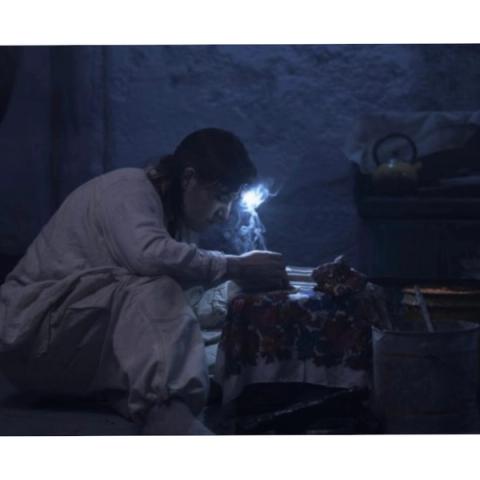
Filmmakers Michelle DeRosier and Zoe Gordon collaborated on THE MOTH, a cautionary story resonating with this current moment in Northern Ontario. It’s 2039 in Omagakii First Nation. The land has been consumed by lithium mines and the Nuclear Waste Corporation has buried 100,000 tonnes of Canada’s nuclear waste in the ground. Few were prepared for the disaster. An Ogichidaa-Kwe woman who refused to evacuate survives in isolation, continuing to love and resist as the world sickens around her. Winner, 15th Rio de Janeiro International Uranium Film Festival 2026 Native Spirit Award.
FACT: In Canada, all used nuclear fuel is currently stored at the site where it was produced. However, this may change. In 2025 the Nuclear Waste Management Organization (NWMO) proposed transportation of radioactive waste to a new deep geologic burial site in the Wabigoon Lake Ojibway Nation-Ignace area, in proximity to numerous Indigenous and northern communities. THE MOTH dramatizes what life could be like in the wake of an unnamed disaster in the area.

Mural by Shelby Gagnon
- Michelle Derosier is Anishinaabe from Migisi Sahgaigan First Nation in Treaty 3 Territory in Northern Ontario, Canada. She has been living in Thunder Bay, Ontario for 35 years. Michelle has been making films for 18 years. Her work has screened nationally and internationally at the Sundance Film Festival, MaoriLand in New Zealand, the New York Museum of Arts and Design, INDIANER INUIT in Germany, LA Skins Film Festival and ImagineNATIVE, to name a few. Her work has aired on APTN, TVO, Canadian Broadcasting Corporation (CBC) and Prime.
- Zoe Gordon is a media artist focused on sound, and has a sound studio, Cricket Cave, in Thunder Bay. She collaborates on media projects for independent release and broadcasters. She’s also a community arts producer. Her personal practice is focused on listening, embodiment and storytelling. Michelle and Zoe are both members of Zhaaboshkaa Collective, a performance based collective whose focus is on healing settler colonial and trauma through art, ceremony and movement.
- To arrange for a screening of the MOTH, contact the filmmakers at: cricketcave@gmail.com.
Nuclear Hotseat Hot Story with Linda Pentz Gunter

That hissing sound you’re hearing is all the air going out of the new reactor hot air hype balloon. Linda Pentz Gunter brings her insights and sarcasm to bear against SMNRs for this week’s Hot Story.
Links:
- Karl Grossman article: Op-Ed: Explosive Play Ignites Discussion – on the Bellport, Long Island August 6 Hiroshima anniversary staged reading of Libbe HaLevy’s play ATOMIC BILL AND THE PAYMENT DUE.
Get a Free Excerpt from Yes, I Glow In The Dark!
Join the mailing list for weekly episode alerts and Libbe's free book excerpt.