Episode transcript
Nuclear Hotseat #804 - Nov. 24, 2026
PEACE! But How Do We Get There?
2025 Westheimer Peace Symposium
Libbe HaLevy: [00:00:00] Peace. What's that? All right, it's the absence of war, the assaults, the bombs, the killing. But that's not enough. We say we want peace, post memes about it, attend rallies, bemoan there is no great movement towards peace in the world, or at least here in the United States. But what is this thing, this peace we are seeking?
If it's so good, what works against us attaining it? Would we recognize peace if we saw it? And how might we get ourselves there? It takes three days at an international peace symposium held on the campus of a Quaker college with experts from around the world sharing the many insights they have as to why peace and its opposite manifest.
And with all the insights and beliefs and shared wisdom, just one of these that made perfect [00:01:00] sense came from a Quaker graffiti artist who said...
Todd Drake: We've got to really recalibrate how we educate people in our country. I think we've done a fantastic job of teaching violence in our country. From the school systems, from the pulpit, from the political machine, we use violence as a way of solving so much of our needs in this country, and I think we've got to completely revamp how we teach peace.
Libbe HaLevy: Amen to that. Well, with insights flying between presenters, participants, students, artists, musicians, and members of the audience, you begin to see just a glimmer of hope that we might possibly be able to escape from that awful, dangerous, deadly seat that we all share.
Nuclear Hotseat Theme: Nuclear Hotseat. What are those people thinking?
Nuclear Hotseat. What have those boys been drinking? [00:02:00] Nuclear Hotseat. The corium is sinking. Our time to act is shrinking, but our activists are linking.
Nuclear Hotseat. It's da bomb
Libbe HaLevy: Welcome to Nuclear Hotseat, the weekly international news magazine keeping you up to date on all things nuclear from a different perspective. We're a show for people who know nothing about nuclear who would like to know something, and people who know something about nuclear who would like to know just a little bit more.
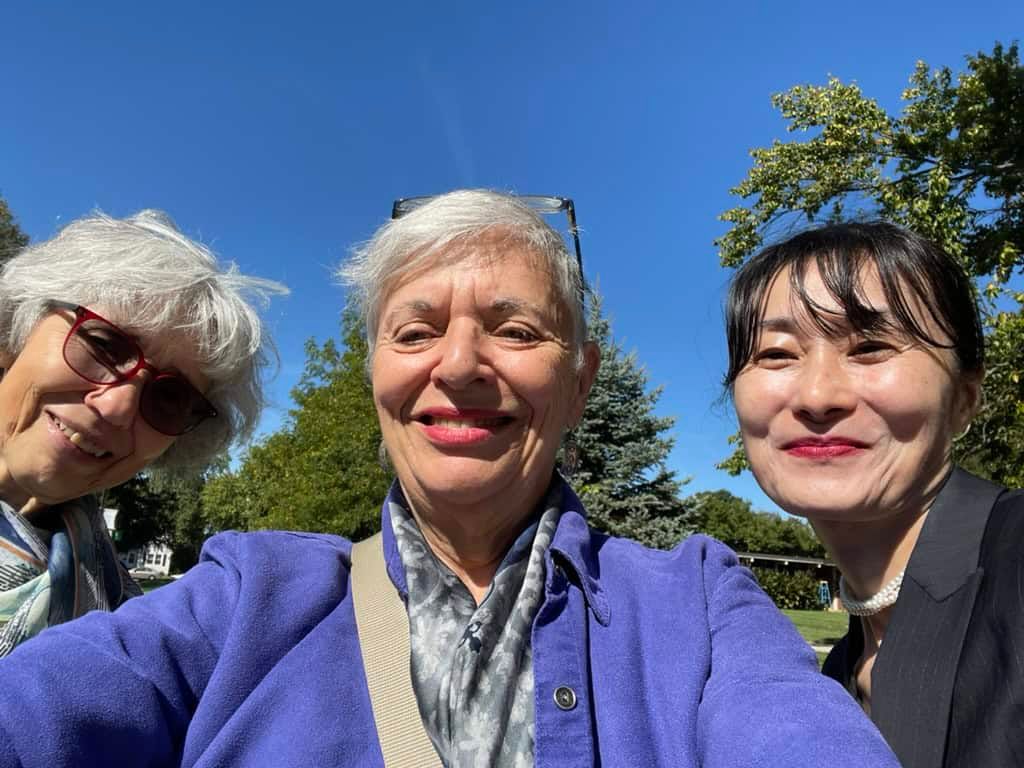
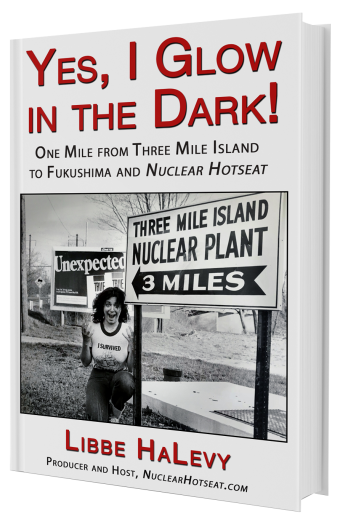
My name is Libbe HaLevy. I am the producer and host, as well as a survivor of the nuclear accident at Three Mile Island from just one mile away, so I know what can happen when those nuclear so-called experts get it wrong. This week, we take you to the 35th Westheimer [00:03:00] Peace Symposium, an event held under the auspices of the Wilmington College Peace Resource Center in Wilmington, Ohio.
It was a jam-packed three days of presentations, panels, discussions, art and music that we made, art and music that we experienced, all helping us find our way forward to a more peaceful world. I attended, and it was held only three weeks after my play, Atomic Bill and the Payment Due, received its world premiere stage reading presented by the Peace Resource Center as part of their ongoing 50th anniversary celebration.
For the Westheimer Conference, you will hear from professors, peace activists, atomic bomb survivors, and others from Japan, Korea, New Zealand, South Africa, London, Canada, and all over the United States. Perhaps it will inspire you to take your own steps towards peace activism, peacefully, of course. [00:04:00] All of it coming up in just a few moments.
Today is Tuesday, November 23rd, 2026, and here is this week's nuclear news from a different perspective. This week for Thanksgiving, we revisit our coverage of the 2025 Westheimer Peace Symposium. Now in its 35th year, a two-day experiential dialogue between ideas and practice regarding a selected theme, in this case, artistic practice and nuclear abolition.
It focuses on creating pathways to peace and nonviolence, and is facilitated by artists and advocates to create awareness about the need to achieve local, national, and global justice and peace. In 2025, the Peace Symposium overlaps with the Wilmington College Peace Resource Center's 50th anniversary conference, Archives as Witness, and the events took place between Monday and Wednesday, [00:05:00] September 29th through October 1st.
The conference invites scholars, artists, and activists to present work inspired by archival research related to nuclear histories as a reflection of the Peace Resource Center's mission and vision over the past 50 years. What results is a rich, unique perspective on peace, the bomb, survival, and the yearning of the human heart for something other than endless life-threatening turmoil.
I was honored to be asked to attend as an instructor for two classes on activist podcasting, a how-to of planning and implementing a podcast of your own, and on a panel regarding media manipulation by journalists in the telling of the story of the atomic bomb at the dawn of the atomic age. This, of course, gave me the opportunity to cover the entire three days for Nuclear Hotseat.
First, a little about the Peace Resource Center. It was established in August [00:06:00] 1975 to house the Barbara Reynolds Memorial Archives. This is the only archive and academic center in the United States wholly devoted to the human experience of nuclear war vis-a-vis the atomic bombings of Hiroshima and Nagasaki, Japan on August 6 and 9, 1945.
Quaker nuclear abolitionist Barbara Reynolds founded the Peace Resource Center at Wilmington College as a way to organize materials she had gathered in Japan to create awareness of the experience of the hibakusha, those who had suffered through and survived the atomic bomb blasts. The center was inaugurated at Wilmington College, a Quaker college in southwest Ohio, on the anniversary of the atomic bombings of Hiroshima and Nagasaki, August 6 through 10, 1975.
Over the next two decades, the center's materials were organized and arranged into an archive for academic research. Rooted [00:07:00] in its archival collection and the Wilmington College core values of peace and social justice, the PRC develops events and programming that encourages nuclear abolition and awareness of the threat of nuclear war.
The panel discussions, presentations, and workshops took place over three days. Unfortunately, none of the presentations was recorded, so what follows is a mosaic of voices from those who were there, some presenters, some audience members, many students. First, I spoke with Yvonne Pauly, an ebullient presenter who attended with her husband from New Zealand, and was scheduled to present an analysis of Aotearoa, New Zealand, and Japan, and how their paths have shaped current attitudes towards nuclear power.
Yvonne Pauly: Yvonne Pauly. And you are here from? New Zealand. What
Libbe HaLevy: group, if any, are you affiliated with?
Yvonne Pauly: The University of Auckland. But I've been mostly a [00:08:00] community leader, if you like, in New Zealand.
Libbe HaLevy: What are you doing here with the Westheimer Peace Symposium?
Yvonne Pauly: I would ask myself that question in a way, because I never expected to be coming here.
But I was referred to this by, uh, Rumi Sakamoto from the University of Auckland. She said, "Yvonne, I think you should go to this," because I'd not long been back from Japan and involved in this joint project with Hiroshima University, and she thought this was a really good conference to come to.
Libbe HaLevy: And you're going to be presenting here.
What's going to be the subject of your presentation?
Yvonne Pauly: Nuclear. Let's talk- Let's talk about nuclear. I've called it that. It's a comparative analysis of New Zealand and Japan because New Zealand is entirely nuclear free and has been for many [00:09:00] years. And Japan, even though we know they had the bombings in '45, have gone fully nuclear in terms of nuclear power.
And I was just interested in the fact that New Zealand had gone nuclear free and Japan had gone the other way and, and really just kind of go and, and look at that kind of question and whether how Japan felt about nuclear power. 'Cause I knew they strongly, at Hiroshima, feel very strongly about nuclear weapons.
So I was very interested to find out that they didn't put them together, whereas in New Zealand we don't want nuclear power or nuclear weapons. So we see them as a similar thing, but not so much in Japan or maybe in America as well.
Libbe HaLevy: Also attending from great distance, South Africa to be exact, is Sky Mkuti.
Her topic, the risks of nuclear threats in great [00:10:00] power security volatility.
Yuki Miyamoto: My name is Sky Mkuti, a international relations scholar, and c- I'm coming from South Africa. Yes, and I'm a lecturer in international relations.
Libbe HaLevy: How did you find out about this event and what brought you here for it?
Yuki Miyamoto: I think PRC had advertised it, that it was go- it was gonna have a, it was gonna celebrate its 50th anniversary.
And so since I am a proponent or an ambassador of peace, I consider myself a scholar of peace or scholar of international relations, I thought it would be interesting to actually talk about what we are facing currently as my title or the title of my article is Facing the Risk of Nuclear Threats in Great Power Security Volatility in the 21st Century.
So I thought that perhaps it would add into the narrative of peace by talking about what we are going through currently in the international relations.
Libbe HaLevy: And that was the subject of your presentation?
Yuki Miyamoto: Yes, it was. Thank you.
Libbe HaLevy: How do [00:11:00] you think it went?
Yuki Miyamoto: Oh, it went great. I think everybody was concerned or was praising the fact that South Africa or an African country was also part of the conversations.
Yeah.
Libbe HaLevy: And where do you go from here?
Yuki Miyamoto: From here, we'll continue. We'll be publishing and continuing with this narrative of peace because we want to live in a better world.
Libbe HaLevy: Don't we all?
Next, I met up with Robert "Bo" Jacobs, one of my favorite interviewees for Nuclear Hotseat.
Robert "Bo" Jacobs: I'm Bo Jacobs, and I'm here. I live in Portland, Oregon.
I'm an emeritus professor at the Hiroshima Peace Institute of Hiroshima City University.
Libbe HaLevy: What are you here to provide or be part of at the Westheimer Peace Symposium?
Robert "Bo" Jacobs: I'm here mostly to listen to people and to learn. I'm here also to participate in a dialogue with, uh, two other scholars, Lisa Yoneyama and Norma Fields, around nuclear issues broadly defined, and also their relation to [00:12:00] archives and how we can hold onto information and how we can pass on information.
Libbe HaLevy: Bo is very modest. Dialogue, Archives as Witness. Much of what he shared in that discussion was covered in our interview with him on his book, Nuclear Bodies: The Global Hibakusha. It was posted as Nuclear Hotseat number 741 from September 9, 2025, and we will link to it on our website under this episode number 804.
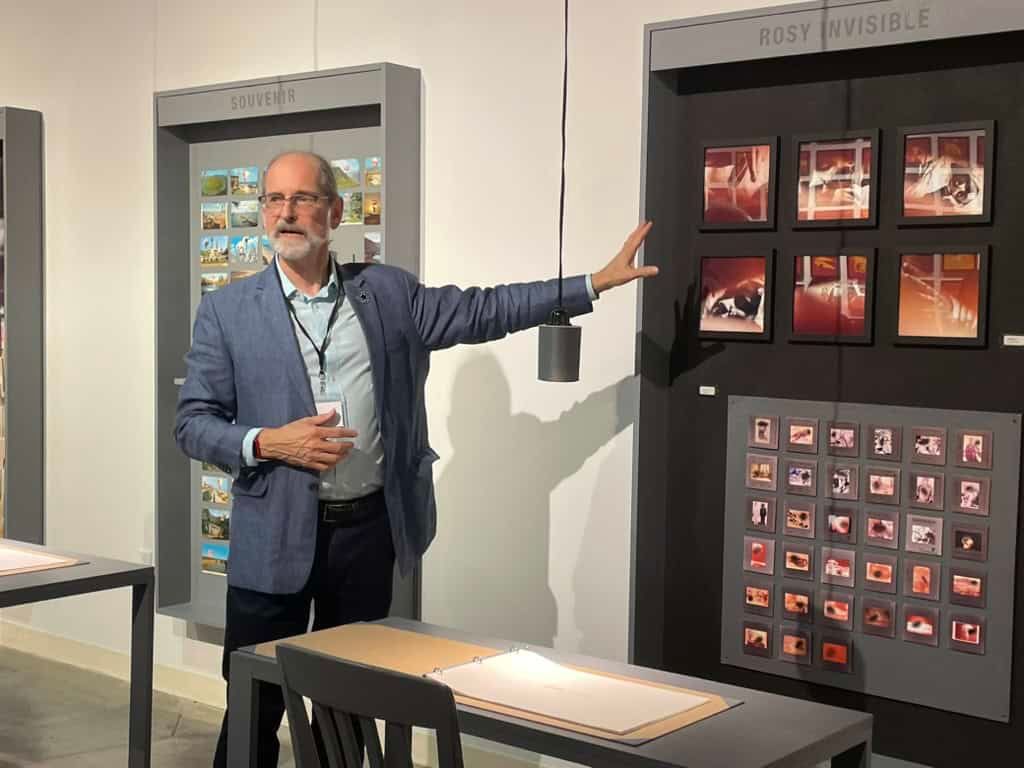
Professor Claude Baillargeon served as curator of the brilliant art exhibit memorializing the Hibakusha experience. Here, he explains how he first became involved with the Peace Resource Center and the Westheimer Peace Symposium. What was your position in helping to put together a very important aspect of this 50th anniversary of the founding of the Peace Resource Center and the Westheimer Peace Symposium?[00:13:00]
Prof. Claude Baillargeon: Well, about two years ago, Tanya Mouse asked if I might be willing to serve on the advisory board that she put together for the 50th anniversary. I got to know her about two years before when my wife, Katie McCormick, had an exhibition, a solo show, in the Quaker Heritage Center. And at that time, I came to help Katie, and Katie had been to the Peace Resource Center before.
She had discovered the wealth of material, especially with regard to photography. And since I am an historian of photography, she said, "You will be very interested." So I took a quick look, and I was hooked right there. And so Tanya saw my enthusiasm, and she was looking for people from different discipline to help her out for the planning of the fiftieth anniversary and the eightieth of the commemoration.
And she asked if I would serve on the board. And I said I'd be very [00:14:00] happy to. And one of the first thing that she asked us once we met all via Zoom, because we were from all over United States and Canada, 'cause I live in Toronto, she said, "You know, what can you imagine that we could do to mark this very special anniversary?"
Fifty years, like it only happened once. And because I had already, through Katie, discovered the richness of the photographic collection, I said, "What if we did an exhibition to highlight this collection? Because there is right now no account of it anywhere. There is no one has ever looked at it and said, 'Look at the rich collection.'"
Then people were like nodding on the committee, and then I said, "Well, you know, perhaps we might even do a catalog," because the catalog lasts a lot longer. The exhibition is temporary; the catalog is permanent. And that's all that Tanya needed to hear. So I made, shall I say, I made, um, a proposal, if not to say a [00:15:00] deal with her.
I said, "Tanya, I am happy to do this pro bono." It will take whatever time it takes if you would agree to lend the resulting exhibition to Oakland University where I teach, which is north of Detroit." And she took no time at all to say, "Absolutely." That sealed the deal.
She is known for moving very quickly as soon as she spots anyone or anything.
Libbe HaLevy
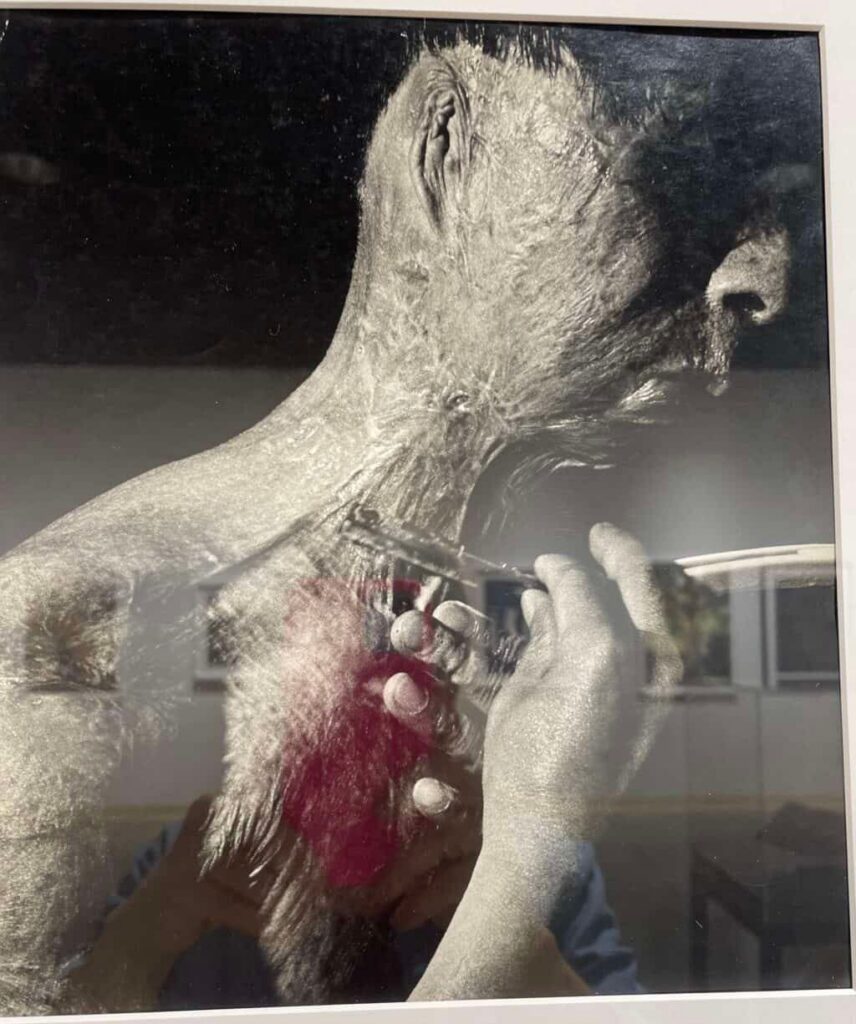
You gave us a walkthrough yesterday that was quite thorough, and we don't have time to go through that, and it's also extremely frustrating to talk about visual art when we're on an audio-only medium. However, there was one picture, I featured it on the website, I spoke about it a little bit, but I'd like you to, and that is of the hibakusha, the man who was a survivor of the bomb blast at Nagasaki.
Prof. Claude Baillargeon
His name is Yamaguchi Senji. I always put the surname first using the [00:16:00] Japanese tradition. And so he was one of three particular hibakusha from Nagasaki that Murasato-san, the man that we actually interviewed for the catalog and also yesterday morning was presented at one of the Zoom event. So Yamaguchi is one of the really devoted spokesperson for the hibakusha cause.
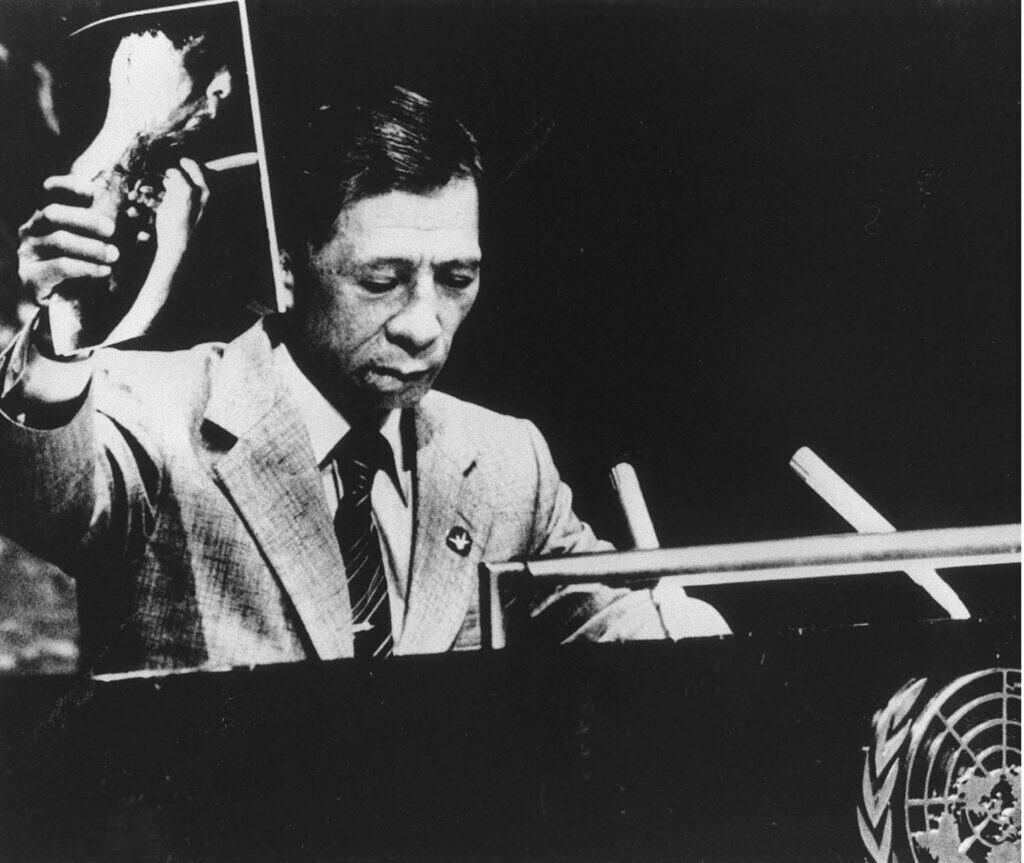
And I believe it's in 1984, if I remember correctly, he actually was the first to speak at United Nation. And so he gave a very compelling speech, very energetic, and in the course of his presentation, he had a magazine in his hand, which is part of the PRC collection, incidentally. The magazine is called Hibakusha.
It was published by the A and H Bomb Council, against A, H, and A Bomb Council. And so that magazine has a reproduction, full-page reproduction of the photograph that you're referring to.
Libbe [00:17:00] HaLevy
And there is a photograph of him holding up the photograph?
Prof. Claude Baillargeon
That is correct. That is correct. That photograph has been published, uh, many times over the years, and that was one of the moments when he made his famous, "No more Hiroshimas, no more Nagasakis."
And so that has become part of, I would say, the permanent record of, uh, activism that really came from men like him and, uh, Taniguchi w- being another one that really from Nagasaki were known worldwide as people who travel. In fact, Yamaguchi, the man who is shaving in that photograph, had done a world tour before Barbara Reynolds did hers in 1962.
It's a little-known fact, but he had gone to a number of the countries that had nuclear arms to speak against, to stop the building of bombs and the use of them especially. So he is one of those hibakusha that you did not need to force or to, you know, put pressure, "Would, can we take your picture?" He was always, "Look at my condition.
This is [00:18:00] what it caused to me and to thousand of others." So he was very articulate. And so his mark in history, you will, no one will have any trouble to find information about him because he has been interviewed. He's in many movies, uh, including one of my favorite, which is called White Light, Black Rain.
So he is one of the, I believe, eight hibakusha that are interviewed throughout this film.
Claude provided and narrated a walkthrough of the Memorializing the Hibakusha Experience exhibition, conveying history, context, and a thorough sense of how the various pieces of the exhibit were in Art Talk in conversation with each other.
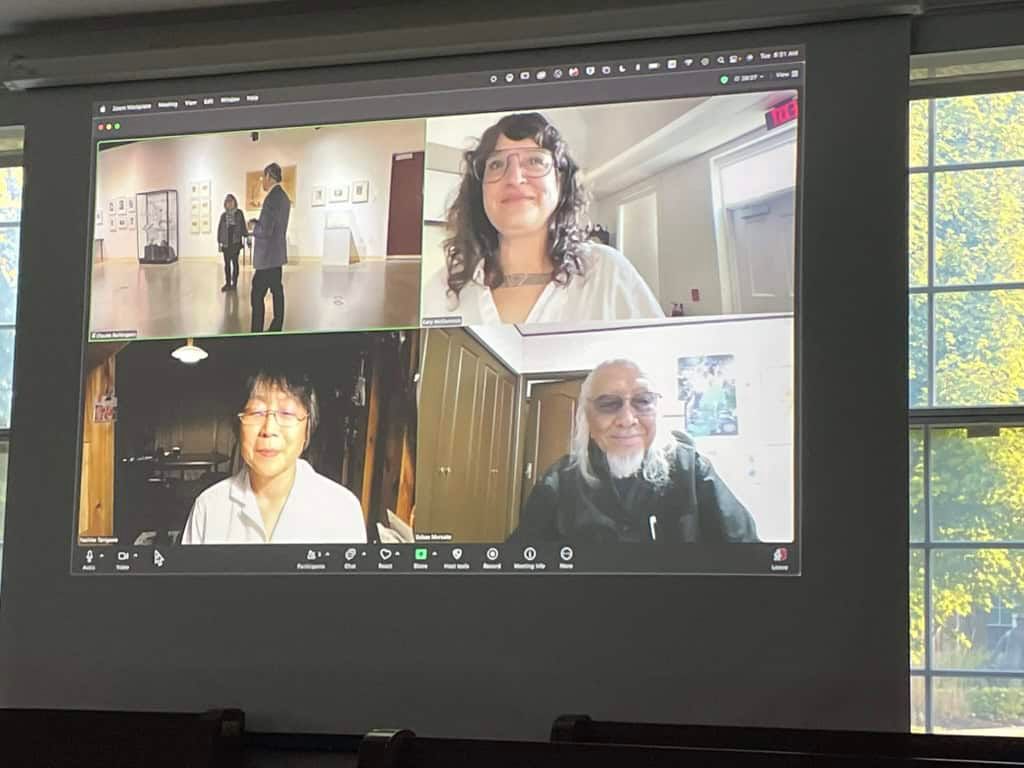
He also facilitated the Zoom session Witnessing and Photographing Atomic Bombing Sufferers. It was a conversation with Morisato Sakai, the photographer who took the photo of hibakusha Yamaguchi Senjihi shaving himself that was highlighted on Nuclear Hotseat number [00:19:00] 743, the episode on the Peace Resource Center and the world premiere staged reading production of my play, Atomic Bill and the Payment Due.
Claude also provided us with the copy of Mr. Yamaguchi speaking at the United Nations while holding up a copy of that photo, an historic moment. All will be linked on the website nuclearhotseat.com under this episode number 804. The work of modern artists was also included in the art show. Here's Ellen O'Hara Slavik.
Speaker 24: Well, I have work in the art show here, so I really want to talk about that, and I'm doing a workshop on cyanotypes, which are sun prints that I did a lot of those in Hiroshima. So I'm very excited to share that and what I've done for, since 2008. Well, I've been focused on war and things forever, but I'm here to just, I'm always learning more and being with like-minded people for peace and caretaking and just being together in a wild place to be in Ohio where this [00:20:00] exists is kind of amazing.
So yeah, very excited to be here.
Libbe HaLevy: The other modern artists included in the show are Katie McCormick, Migiwa Orimo, and Kai Ito. One of the things that surprised me as I walked around campus is that I was recognized and remembered from when my play was produced just three weeks before. Two members of the tech team who attended the symposium specifically singled me out to talk and had this to say.
Nathan Sorn: My name is Nathan Sorn. I am going to different events that include music and any political standpoints on what happened during the nuclear era.
Libbe HaLevy: You were involved on the tech side of my play, Atomic Bill and the Payment Due, which was three weeks ago, and you were just saying certain observations that you had about it.
Nathan Sorn: When I viewed this play, it was something that touched me, and it is a message that needs to be spread [00:21:00] throughout the world, and I believe that people need to see and need to hear because it is so strong and it comes from the heart. In addition, this play was so well written that anybody will be able to follow it, and the images that are linked to this specific play are things that some people have never seen and are going to help in the message of what happened during the nuclear era.
ATOMIC BILL volunteer: Elaine Groves. I was the assistant stage manager for Atomic Bill and the Payment Due, as well as a volunteer for the symposium.
Libbe HaLevy: What is it that draws you to this kind of work?
ATOMIC BILL volunteer: I really love the focus on social change and social justice at the college, so being able to be a part of this and seeing how it affects everybody around us in the community, and even having members from New Zealand being here, just seeing the effect on everybody.
Libbe HaLevy: And what do you hope to do with the information that you gained from this?
ATOMIC BILL volunteer: I am going to [00:22:00] help with the podcast from now on, and then also I'm going to send Tanya, the director for the Peace Resource Center, a email to see if there's any more volunteering positions or even a job at the Resource Center.
Libbe HaLevy: Two members of the new generation to fight against nuclear. We'll return with this week's Thanksgiving encore presentation of the 2025 Westheimer Peace Conference in just a moment. But first, next week, starting on November 30th, the United Nations will hold five days of meetings on the Treaty on the Prohibition of Nuclear Weapons, referred to as the TPNW.
It's an international treaty to do just that, prohibit any use, construction, or deployment of nuclear weapons. With the help of Nuclear Hotseat listeners, I've attended the last two TPNW reviews in 2023 and 2025, bringing you reports on what's [00:23:00] being said and who's saying it as we progress towards an international mandate for the total elimination of nuclear weapons.
This year, for the officially titled Review Conference of the Parties to the Treaty on the Prohibition of Nuclear Weapons, I will be there again, capturing the excitement, the intensity, the international intent focused on getting rid of nukes. The problem we face here at Nuclear Hotseat is that this incurs expenses above and beyond the monthly cost of producing this show.
While the plane is booked, and I'm definitely going, we're still behind in the quest to raise the additional funds necessary. That's why I'm turning to you and asking for your help. At the UN, they will be discussing and strategizing ways to act globally, the cutting edge of progress towards ridding the world of nukes.
I believe that's important information for all of us to know. Don't [00:24:00] you? If so, help me get there to get the news to you. I need to raise an additional one thousand dollars to cover the basics and welcome donations of any size. Just go to nuclearhotseat.com and click on the red donate button. You can also donate through Zelle at info@nuclearhotseat.com.
Nuclear Hotseat is a 501(c)(3) nonprofit, so your donation is tax-deductible to the extent allowed by law. Please help me get to New York for the United Nations meetings on the Treaty on the Prohibition of Nuclear Weapons. Make sure that Nuclear Hotseat can keep doing its work. Donate today at nuclearhotseat.com and know that I thank you for caring enough to listen and keep yourself informed, and I am deeply grateful for all your support.
Now, we return with this week's Thanksgiving [00:25:00] revisit to the 2025 Westheimer Peace Conference at Wilmington College in Wilmington, Ohio. One very special aspect of these events was the attendance of first, second, and third generation hibakusha atomic bomb sufferers from the Peace Resource Center's sister organization, the World Friendship Center in Hiroshima, Japan.
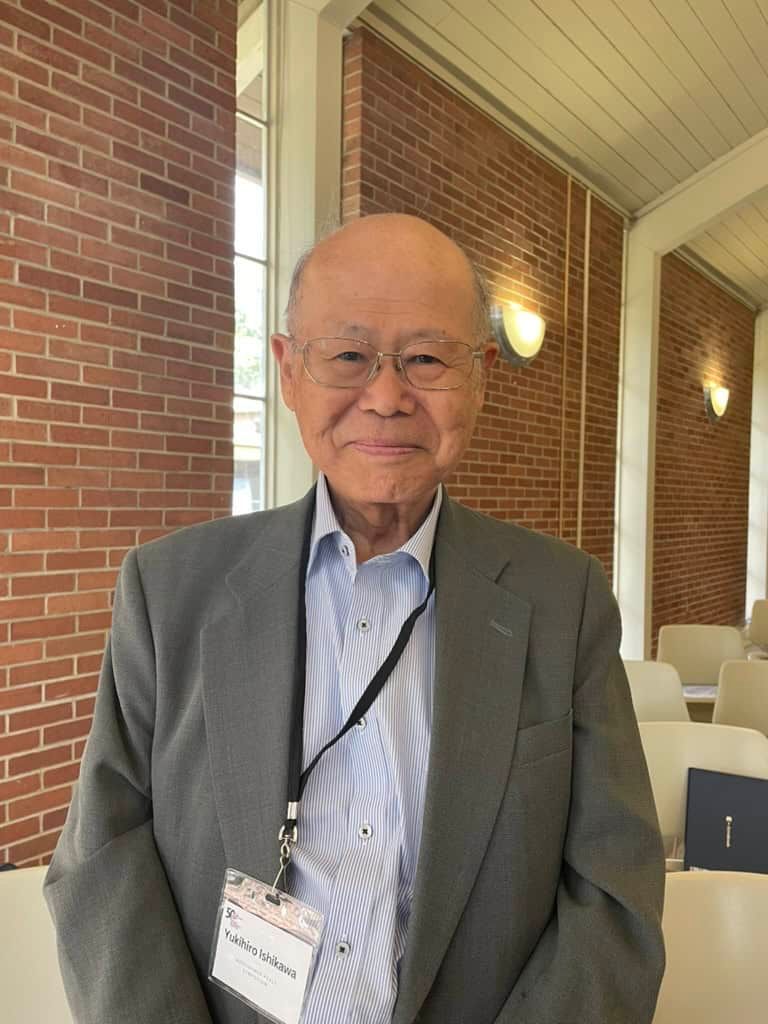
These three individuals, who were related by experience but are not blood relatives, shared the experience of the atomic bombings of Hiroshima and encouraged messages for peace. Here is Yukihiro Ishikawa, , a hibakusha who serves as Secretary General of Totori A-Bomb Victims Association.
Mr Yukihiro Ishikawa: I'm always think about to eliminate nuclear weapons from the Earth.
That only one way i- is there, that is, uh, to eliminate nuclear weapons themselves [00:26:00] from the Earth, right? I think we hibakusha is always think about and appealing to the world internationally. I think, uh, our power, we are as a civilians on a, a peace movement not supported by any, right, political or, uh, other groups, right?
So we need to continue is the best way now.
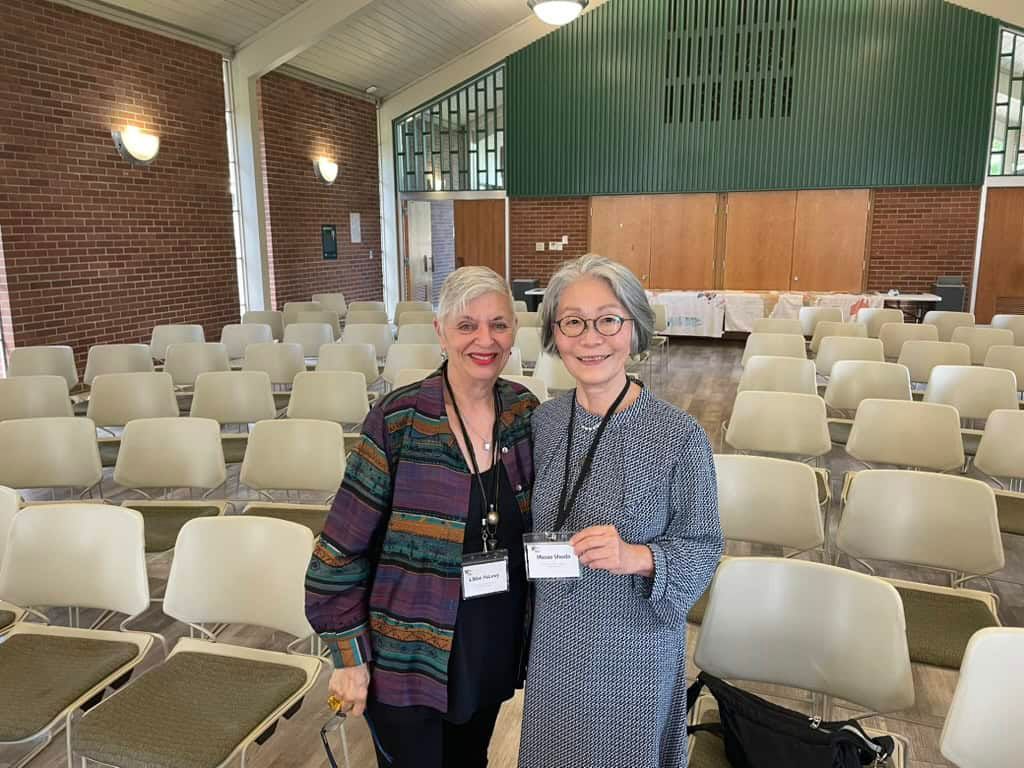
Libbe HaLevy: Second generation hibakusha Masay Shoda presented a deeply moving telling of the story of Hiroshima, one that used simple language and gentle drawings to present what happened with children in mind. Your presentation was deeply moving with the drawings and the narration of what it was like on the ground in Hiroshima after the bomb came down.
Mr Yukihiro Ishikawa: Mm-hmm. Thank you.
Libbe HaLevy: What is it like for you to present it as often as you do in as [00:27:00] many places as you do around the world?
Mr Yukihiro Ishikawa: I think the paintings were painted by the Kiyomi Kono, Ms. Kiyomi Kono, and she is not good at paintings, but she wanted, in order to spread out her experience, she thought that she has to paint the drawings so that, uh, even small children can understand easily.
And no need to use big words. Instead, what she felt and how she felt and what she saw, she wanted to illustrate and showing them to the little kids, from the little kids to adults and foreigners. Because foreigners sometimes cannot understand only just the speaking and this, just pictures and photos. But when it comes to the drawings, [00:28:00] very personal feelings included, and her writings.
And I was so much moved with her way of telling the story. Very quiet, not too kind of, you know, pushing or, uh, strong words. But I felt really strongly a 14-year-old girl experienced such a horrible hell on the 7th. So her story and my father's story put together, and, uh, I would like to make a good presentation to little kids, to the foreigners, and, uh, adults.
I still learn a lot from Kiyomi Kono, and it's, it is my great opportunity for me to meet you [00:29:00] and to be interviewed over here. So thank you so much for the audience.
Libbe HaLevy: Is there anywhere online that your telling of this story with the pictures is available that I might be able to send people to?
Speaker 17: I'm sorry, so far we do not have such, uh, you know, videos.
But in the Peace Memorial Museum of Hiroshima, they have, uh, huge numbers of photographic data and documents and so many bicycles, pictures, and the victims' belongings. Those were very important for the family, but, and they've been keeping for many years. Especially mother has been keeping it in her house, special place, hiding them.
And every day looking at it and missing the lost child [00:30:00] and loved ones, and hoping that they will, can rest in peace in the heaven.
Prof. Claude Baillargeon: That was second generation hibakusha Masayo Shoda. For copyright reasons, we do not have any photos of the actual presentation, but Masayo Shoda also showed line drawings done by several different hibakusha, and we have that up on our website as the keystone picture for this week's show The legacy of the atomic bombing of Hiroshima continues to third generation hibakusha, those who carry forth the message and the tradition started by eight-year-old hibakusha Sadako Sasaki of folding paper cranes in commemoration of the bombing.
Honjiro Jiwa: My name is Sanjiro Ikeda. I'm from Hiroshima in Japan.
Libbe HaLevy: You are third generation hibakusha, meaning it was a grandparent or more than one grandparent who was exposed to the atomic bombing in Hiroshima.
Honjiro Jiwa: Yeah. [00:31:00]
Libbe HaLevy: What did you learn about that growing up in your family? Was it talked about, or was it hidden?
Honjiro Jiwa: My grandparents, the atomic bomb survivor.
So they talk to me about atomic bomb in Hiroshima. My grandma is a, is atomic bomb survivor from the hypocenter about, uh, one miles, just one miles. And she talk to me about a lot of things about before the atomic bomb, and just atomic bomb timing, and after the Hiroshima. So what changed Hiroshima after the atomic bomb.
I talk about peace and sports after the bombing.
Libbe HaLevy: Sanjiro reports that his family is well, and there are currently no known impacts from the atomic bombing on their health. One of the remarkable discoveries I've made this year is the existence of Korean hibakusha, workers and prisoners who were in Hiroshima when the atomic bomb [00:32:00] exploded.
They were, of course, included in the discourse during the Westheimer Peace Symposium under the title Whose Suffering Counts? It was presented by Danbi Lee.
Danbi Lee: Danbi Lee. I study in the University of Delaware, but I'm originally from South Korea.
Libbe HaLevy: You gave a presentation earlier today about some research that you have been doing, and you drew certain parallels and contrasts between how the Korean comfort women, Japanese hibakusha, and Korean hibakusha are perceived in Korea. Briefly just explain what those differences are.
Danbi Lee: I'm trying to compare comfort women and Korean hibakusha. The logic behind this is that they are asking the same reparation to the same government. For example, like, they are the victims of a colonial era, [00:33:00] and asking the reparation to South Korean government and Japanese government.
But only the comfort women has spotlighted, and they received a lot of attention, while the, um, Korean hibakusha is completely erased in the history. So I'm trying to figure out why there is this different. And if, if you pair the, um, Japanese hibakusha and Korean hibakusha together, they experienced exactly the same historical event.
But one group, Japanese hibakusha, they became, like, the symbol of peace movement and anti-nuclear, um, activism, while Korean hibakushas are not recognized. So this is the research question that I'm trying to figure out for the next year.
Libbe HaLevy: And what struck me about the work is that I've been doing Nuclear Hotseat now for 14 and a half years, and until March of this year when I was with ICAN in New York at the United Nations, I had never heard that there [00:34:00] was such a thing as a Korean hibakusha.
Mm-hmm. And I'm wondering, why now? Why are we now suddenly hearing about them, and they are coming to, if not prominence, at least awareness in the minds of some of us who look at this arena. Why now?
Danbi Lee: I think recently Korean media has released the story about Korean hibakusha, and many people got aware of this.
So before the media ha- portrayed their story, like, even in Korea, most of the Koreans did not know their existence. But even for me, the first time I heard of their story was through the documentary film the media has, um, exposed. And I asked my friends, like, "Have you heard of this group?" And some of my friends were, like, telling me, "Oh, I watched that documentary film," because it was pretty popular TV program show in Korea.
So I think that really, um, hit [00:35:00] the spot few years ago, yeah.
Libbe HaLevy: So the media landscape shifted.
Danbi Lee: Yes. Right. Yeah.
Libbe HaLevy: One of the most unexpected but telling stories I heard over the three days of events was from attendee Melody Kawamoto. During one breakout session, we were asked to share one thing we learned about the atomic bomb or bombings when we were little.
While I cited an existential crisis stemming from Disney's Our Friend the Atom, Melody had a much more personal story.
Melody Kawamoto: I've been a peace activist for y- most of my life, and one of my priorities is about nuclear bombs. I think I was about eight years old. I lived in a small town in Hawaii, and I happened to be sitting by myself, playing by myself, and my grandfather was walking by, and he seemed to be chased by [00:36:00] two white men in black suits with a black felt hat, wearing a white shirt and tie, which really amazed me because I'd never seen that except in movies.
And he was telling them, "No, no, don't ask me again. I will re- not become a United States citizen. Your country killed my family in Hiroshima." For some reason, that stuck with me. It might have been that I didn't even know about the bombing until that time. I, I'm not sure. But it was in the age of when, in the 1950s, when we were told that we were going to be attacked, so we had to duck and cover and, you know, in schools.
So I was aware about the bomb, but I didn't realize that I had a connection with it.
Libbe HaLevy: And did your grandfather ever become a citizen of the United States?
Melody Kawamoto: I don't think he did. My other grandparents did, [00:37:00] but not him.
Libbe HaLevy: The Wilmington College Peace Resource Center has a strong affiliation with the arts and how they can be used in an activist context.
This was extremely evident over the three days. Arts presentations included Borrowed Landscape, a live narratorial presented by four actors and three musicians, with the music composed by Dai Fujikura, who was present from London. It presented the interplay of three musical instruments in dialogue with each other.
A famous Stradivarius walled up for years in a cellar in Budapest, a double bass left behind in 1939 when the owner was fleeing from Poland to Eretz Israel, and a piano silenced after the Hiroshima bomb killed its young owner. The music was subtle, nuanced, more tonal than melodic, yet deeply haunting and evocative, well-suited to the subject matter [00:38:00] Kansas City-based artist Nate Hofer performed original solo ambient soundscapes on pedal steel guitar from his album Decommissioned, which was actually recorded inside a former Kansas City missile silo.
Again, the music was haunting, otherworldly, and evoked the great sadness and loneliness of the castaway shell of a world-destroying weapon And there was a screening of Bombshell, the fight to control the A-bomb story with director Ben Loderman and producer Gaia Del Simone. They are the only artist communicators I have ever met who were as obsessed with William L.
Lawrence of the New York Times as I have been, as witnessed by my play Atomic Bill and the Payment Due. The screening was in advance of its airing, not yet scheduled, on PBS American Experience. The day after the screening, we had a lively discussion on the difference between [00:39:00] how the story of Lawrence and the other reporters is told in a straight documentary style versus the liberty I had as a dramatist to explore emotion, motivation, spirituality, and human frailty in the dramatic form.
We will have more on Bombshell after the date for the PBS screening is set. The challenge of attracting younger activists to the anti-nuclear cause is always in the forefront of the thinking of those of us who aren't exactly young anymore. That's why this brief discussion with Raj Ali is so encouraging.
She is currently a third-year undergraduate student at the University of Toronto studying peace, conflict, and justice as well as history. She serves as a co-chair of the Youth Nuclear Peace Summit and a youth coordinator for Reverse the Trend Canada.
Raj Ali: Raj Ali. I'm here from Toronto, Ontario, Canada, and I'm here with Reverse the Trend Canada, and [00:40:00] I'm a youth coordinator for RTT Canada.
Libbe HaLevy: In California, the joke is that a young activist is anyone under 60. You're obviously dealing with a younger demographic. What is it going to take and how can we work together to bring more young people, meaning lots under 60, under 30, under 20 if we can, into this movement to carry it to the future?
Raj Ali: We need to really remind people that this has everything to do with them and that if they care about other movements, whether that be climate change or any kind of human rights movement, whether it's gender equality or literally anything under the sun, it connects back to these power asymmetries and people need to be reminded that they have everything to do with this because it's often their tax dollars that are going towards funding this industry and it is them that is most likely to be the target of a nuclear weapons strike as civilians.
So people need to be reminded that this is about them as much as it is about people halfway across the world that are maybe [00:41:00] were affected by these communities. Here in North America, we are just as much at risk of it as anybody else.
Libbe HaLevy: What use are the arts in getting this message across to the younger demographic?
Raj Ali: Art is a language that everybody can understand. It doesn't matter where you're from or what background you have, art is something that we all engage in without concern for where, what our religion or ethnicity or sexuality or anything else is. It's something that we all relate to. And because it's something that we all have in common in some way or another, it is exactly the perfect tool for us to connect with one another and understand why we are not all so different, and that we all really do share the same concerns: that we wanna live, we wanna be protected, and we want to be heard and have our rights preserved, especially our human rights.
And this is fundamentally a human rights problem. And that's why art is the perfect way to engage with people and make it so that they know that they do have something in common with their neighbors and those that don't live near them.
Libbe HaLevy: And what will it take to get you on board with Nuclear Hotseat to be our [00:42:00] once-a-month youth commentator?
Raj Ali: I... It will not take very much. This sounds wonderful, and it's something that I'd definitely love to know more about and be engaged in.
Todd Drake: We will talk.
Prof. Claude Baillargeon: Okay. Rose Ali from RTT, Reverse the Trend Canada. All this, and she is only 21. I don't know about you, but when I was 21, I was a mess. I had the great fortune to meet up with people who were not only former interviewees of Nuclear Hotseat, but who through the years have become friends.
One of these is Norma Field. She is Professor Emerita of East Asian Languages and Civilizations at the University of Chicago. She moderated the keynote dialogue with Bo Jacobs on archives as witnesses, and then shared with me that she had a book in the works.
Libbe HaLevy: I'm talking with Norma Field. Norma, you're here from where, and what or who do you represent?
Norma Field
I am here from Chicago. I [00:43:00] worked for about 30 years. I taught at the University of Chicago, the true home of the Manhattan Project, because it's the site of the Fermi experiment. And I don't know that I represent anyone, but I am here because I've had the good fortune to spend time in Fukushima, and I'm trying to write about it in a global and historical context.
And I feel like I carry their souls with me, as well as the souls they help me to connect with of people who have been exposed to radiation or their families or their communities. Where is the book in the writing process, and when can we expect to see it and buy it? Oh, thank you so much. It could be a third.
It could be halfway done. I'm still figuring out the shape it should take so that I'm both responsible for information and I can reach readers' hearts.
Always the goal. Well, at whatever point you have the book done, [00:44:00] you know you've got an interview on Nuclear Hotseat.
I look forward to it because I've relied on your show for so many years.
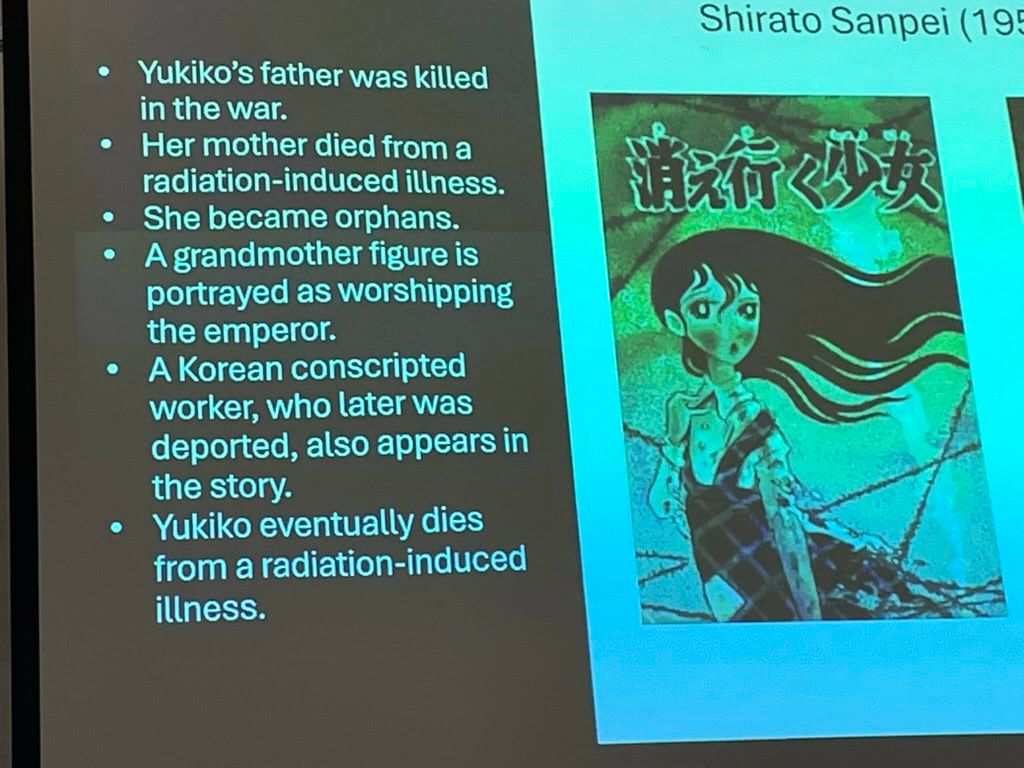
Another friend and multiple interviewee for Nuclear Hotseat is Yuki Miyamoto. She presented on how the pop culture of manga and underground comic shops played a significant role in post-war communication about the atomic bombings.
Libbe HaLevy
Yuki, you've been a guest on Nuclear Hotseat many times. This particular event, you were presenting from an area of expertise.
What was it that you were presenting to the audience?
Yuki Miyamoto: I wanted to convey this idea that sometimes, especially after the World War II, SCAP, Supreme Commander of the Allied Powers, did impose censorship. But they actually, um, their branch of censorship branch was dissolved in 1949, two years or three years before Japan became independent.
So the SCAP left. [00:45:00] So meaning, like, Japan was self-censoring. And I wanted to see like even after SCAP left, maybe there are some self-censorship mentality is continuing and why is that, what underneath? And it seems to me that talking about the destruction of the, um, fellow Japanese citizens would invite discussion of imputing the emperor's war responsibility, which was very much taboo, especially in the '50s when reverse course policy was introduced, which was introduced by both SCAP, but also Japanese political elites supported it because some of them still wanted to remilitarize Japan after the war.
Uh, SCAP's original intention was demilitarize Japan because that would be safe. That was a horrible war that Japan led was because of the fascist ideology [00:46:00] and all that things. So they wanted to dissolve that ideology. But because of the, uh, geopolitical condition and the Korean War, so those political elites in both sides wanted to remilitarize.
And so talking about a self-critical reflection of the war was becoming less and less popular. So with that background, imputing the emperor's responsibility during the wartime, wartime responsibility was becoming a taboo. Because the emperor was again becoming sort of elevated to a place where people worship.
So I wanted to introduce the idea. It was not just externally imposed, but also internally people started censoring themselves, not talk about the war, not talk about the atomic bombing. And atomic bomb victims were, I don't have a better word, so I hope that this was not offensive, but some of them were treated as pariah.[00:47:00]
And so they don't want to be associated with hibakusha, who are the sufferers of the bombing. So I just wanted to say that it's not like all Japanese were supporting anti-nuclear, um, agenda. And some of them were supporting it, but it doesn't mean that they were nice to hibakusha either. You know, so that kind of complexities is what I wanted to bring out.
Libbe HaLevy: What I found fascinating was towards the end of your presentation, you went into Japanese comic books. What was the significance or the importance of these comic books in the 1950s as regards what you just talked about?
Yuki Miyamoto: Right. Thank you. Especially in the 1990s on, the Japanese government started using manga as a soft po- soft cultural power, so it was almost endorsing that kind of medium, but it was not always like that.
Manga was very much censored even [00:48:00] before the war, but the government started using manga for propaganda during the war. But after the war, manga was kind of frowned upon. But interesting thing is that this kashihon, which is rental comic stores, kashihonya, rental comic shops, they are a sort of underground network.
Because those comic books were not going through the major publishing companies, so they were less constrained in terms of expressing themselves. Mm-hmm. Because of that, they were able to express themselves and they can touch upon taboo subjects as well. Because of this rental comic network is underground, we don't know much about it.
And also in the '50s, and, and especially in the mid-50s, this growing middle class, especially mothers, were concerned about the contents of manga, and some of them were [00:49:00] totally understandably, you know, the kind of- Full of eroticism and grotesque, and it's so inappropriate, kind of child pornography. All, all those things.
Libbe HaLevy: Those are the ones the kids really like.
Yuki Miyamoto: Right. Right, right, right. But as adults, and especially after the war, people were concerned about morality because what they, they had firmly believing, which is the emperor's divinity, was totally myth. And so they were having this identity crisis and associated with morality.
So especially having that experiences, they were very concerned about youth morality, the young people who are reconstructing Japan and what kind of morality they were adapting for themselves.
Libbe HaLevy: And they destroyed very violently and very graphically many of these comic books and the establishments that spread them.
Yuki Miyamoto: [00:50:00] Yeah, exactly. Like 1953 or 4, s- uh, it started with 35 titles of comics books and stuff, but it culminated in 66,000 books and, I mean, titles. Also, it was a kind of a public execution, so it was theatrical and it was very sensational, and that's how they wanted to convey their message.
Libbe HaLevy: In post-war Japan, Japanese American doctors, researchers, and clerical staff, many just recently released from the American internment camps, were recruited to come to Japan to work with the Atomic Bomb Casualty Commission, or ABCC.
But it wasn't a smooth transition for them. Instead of being welcomed, supported, honored, and respected for their knowledge of both Japanese language and culture, they faced racism, ostracism from schools, public transportation, and housing, and this despite their [00:51:00] contributions to the ABCC. This is the area of study of my next interviewee, Crystal Uchino.
Crystal Uchino: I'm from Kyoto, Japan. I'm a researcher and educator in Kyoto. I work at Doshisha University.
Libbe HaLevy: You were a presenter yesterday at the Westheimer Peace Symposium that's taking place here at Wilmington College. What were you presenting on?
Crystal Uchino: Well, I was presenting on Japanese Americans in the Atomic Bomb Casualty Commission, but it's part of a larger research project that looks at, kind of tries to reckon with Japanese American trans-Pacific experience and the memory of the atomic bomb.
So in my presentation, I kind of look at the space in between complicity and care, where you have these Japanese Americans who are working for the Casualty Commission, which we know has a somewhat problematic history. And so their role in that, I think Japanese Americans are this group of people who's been kind of written out [00:52:00] of the historiography of the Atomic Bomb Casualty Commission.
But in my research during the occupation period, they made up, you know, up to half of the allied personnel at that time. And they made really important contributions to the studies that were taking place during those years. And Have, yeah, they're just kind of erased from this historiography. And at the same time, these were all very young researchers there.
A lot of them are fresh out of the internment camps. Some of them are going back to Japan thinking that they're gonna do something good for humanity.
Libbe HaLevy: And were you the one who had the slide up about the fact that the scientists, those who were doing the research, were having difficulty getting housing, getting their wives and children on buses, the kids couldn't go to school.
Was that yours?
Crystal Uchino: Right. So, um, this is in, um, post-war Hiroshima, and Hiroshima was [00:53:00] administered by the British Commonwealth, and they had a policy of racial, basically racial segregation policy, which kind of barred Japanese Americans, non-white people, from access to the housing, schools, and various things were provided for other Allied military personnel.
Libbe HaLevy: Even though they were there to do the work and do the research, and had been asked to come over?
Crystal Uchino: Yeah. So many of them, of course, had been, uh, recruited by the US government and civilian administrators of the Atomic Bomb Casualty Commission. And I think eventually, you know, everyone was housed, but definitely, like, this continuation of racial discrimination definitely left a bad taste in, I think, many of their mouths, although it's not something that very many people talk about.
I think James Yamazaki, who I mentioned in the presentation, is one of the few people who has been a bit more outspoken about it. He was outspoken about it in the 1950s, and that was kind of a mild [00:54:00] criticism that he put out to some of the newspapers there. And then later in 1995, you see him change his narrative to be much more critical of, and also more reflective maybe of what it actually felt like.
Libbe HaLevy: That was Crystal Uchino from Kyoto, Japan. There were many other interviews and discussions that I don't have time for here. But to close us out, I want to share a conversation I had with graffiti artist Todd Drake, who is a Quaker, a peace activist, and also known as the Quaker Pirate.
Todd Drake: My name's Todd Drake.
I'm here as an independent artist. I live in Manhattan, n- in New York City. I'm a Quaker, and a printmaker, and a graffiti artist. My street name is Quaker Pirate.
Libbe HaLevy: Why are you here for this event?
Todd Drake: Well, a big part of the work that I, I focus on as an artist is around building peace, and the threat and the history of nuclear, [00:55:00] uh, weapons in this world r- play a big part of what I'm concerned about.
So I was here to also teach printmaking and to give participants a take-home souvenir of the conference, a big embrace peace poster that they created collaboratively with me, so I enjoy doing collaborative work with people.
Libbe HaLevy: And from your position of being so embedded in the desire and the work towards peace, what's it going to take?
Todd Drake: I think that we've got to really recalibrate how we educate people in our country. I think we've done a fantastic job of teaching violence in our country. From the school systems, from the pulpit, from the political machine, we use violence as a way of solving so much of our needs in this country, and I think we've got to completely revamp how we teach peace education.
I think that's, you know... Once this cur- hurricane blows over, that's gonna be what we need to step up with, is a way to have our [00:56:00] society understand that peaceful means are the best means for solving conflict.
Libbe HaLevy: The Westheimer Peace Symposium takes place every year at Wilmington College as a presentation of the Peace Resource Center of Wilmington College.
Thanks and gratitude to the indomitable Tanya Muss for her vision, spirit, energy level, and the genius for bringing people together to work for the planetary sanity that is peace. One can only hope that in the coming years, this bubble of peace created on the campus of a small Quaker college in Ohio can spread its message and attract the funding, support, and audience it deserves so that it can truly change the world.
This has been Nuclear Hotseat for Tuesday, November 24th, 2026. You know, you don't have to miss a single future episode of Nuclear Hotseat because we give you an easy way to get each week's episode. [00:57:00] Go to Nuclear Hotseat. Look for the yellow opt-in box. You really can't miss it. Fill in your first name and an email address, and every week you will get just one email, we don't bug you, but one email that includes a link to that week's show as soon as it posts and a short description of its content.
That way you will be as up-to-date as a human being can be about all the nuclear news that's fit to share. Speaking of sharing, if you have a story lead, a hot tip, or a suggestion of someone to interview, send it to us in an email at info@nuclearhotseat.com. And remember, if you can go to Nuclear Hotseat and donate, thank you.
Anything you can do to help us out, we really appreciate your support. This episode of Nuclear Hotseat is copyright 2026 Libbe HaLevy and Nuclear Hotseat. All rights reserved, but fair use allowed as long as you cite [00:58:00] the program, website, names of guests whose comments you use, and me. For now, this is Libbe HaLevy of Nuclear Hotseat reminding you peace is not just the absence of war, but rather the activity of creating a world without war, and peace requires patience and effort compared to war.
Think about peace. And there you have it, your weekly nuclear wakeup call. So whatever you do, do not go back to sleep because truly we are all in the nuclear Hotseat.
Nuclear Hotseat Theme: Nuclear Hotseat. What are those people thinking? Nuclear Hotseat. What have those boys been drinking? Nuclear Hotseat. The corium is sinking.
Our time to act is shrinking, but the activists [00:59:00] are linking.
Nuclear Hotseat. It's da bomb