NH #794: Nuclear Humor?!? Foreign Policy Expert Bill Hartung Relieves Ugly Nuke Facts w/Stand-Up Comedy + Reactor Radiation Mutations

Nuclear Hotseat
NH #794: Nuclear Humor?!? Foreign Policy Expert Bill Hartung Relieves Ugly Nuke Facts w/Stand-Up Comedy + Reactor Radiation Mutations
0:00—
Transcript
Episode transcript
Nuclear Hotseat #794 - Sept 15, 2026
NUCLEAR HUMOR?!?!? Foreign Policy Expert Bill Hartung Relieves Ugly Nuke Facts w/Stand-Up Comedy
Libbe HaLevy: [00:00:00] Nuclear humor. Isn't that a contradiction in terms? There's really nothing funny about nuclear weapons and the entire process of creating them. Or is there? I guess it depends on where you look, your perspective, and your affinity for snark, irony, or just plain absurdity. And how complicated is it when your day job is as a legitimate paid foreign policy advisor for a nationally recognized institute and you want to make jokes?
Is humor appropriate or horrific bad taste? It takes someone who is in this very position, a stand-up comedian whose day job is as a serious foreign policy analyst, or a serious foreign policy analyst who blows off steam at night by doing stand-up comedy. But either way, he tells you.
William/Bill Hartung: Every movement that has succeeded [00:01:00] really ever has had some sense of joy in the struggle.
I mean, when they filled the jails in Birmingham, they didn't sit on their hands and weep. They sang freedom songs. And we're going to need that because who the hell knows what's going to happen next. This stuff's raining down on us and we need a way to sustain ourselves.
Libbe HaLevy: And what better way than making fun of the entire mess?
Well, when William Hartung, foreign policy advisor by day, turns into his not-evil twin Bill Hartung, the policy-based stand-up comedian, you get a sense of what one person stuck in the thick of things does to help himself and by extension the rest of us survive that awful, dangerous, deadly seat that we all share.
William/Bill Hartung: Nuclear Hotseat. What are those people thinking? Nuclear Hotseat. What have those boys been drinking? Nuclear Hotseat. The corium is sinking. Our [00:02:00] time to act is shrinking, but our activists are linking.
Nuclear Hotseat. It's da bomb
Libbe HaLevy: Welcome to Nuclear Hotseat, the weekly international news magazine keeping you up to date on all things nuclear from a different perspective. We're a show for people who know nothing about nuclear who wanna know something, and people who know something who would like to know just a little bit more. My name is Libbe HaLevy
I'm the producer and host, as well as a survivor of the nuclear accident at Three Mile Island from just one mile away, so I know what can happen when those nuclear so-called experts get it wrong This week, we talk with a foreign policy advisor who balances his day job [00:03:00] with nighttime gigs as a stand-up comedian talking about, well, foreign policy and nukes.
Our guest is William Hartung, whose day job is with the Quincy Institute for Responsible Statecraft, where he focuses on the arms industry and U.S. military budget. But when the sun goes down, with a swift change of first name, he changes from William Hartung to Bill Hartung, a stand-up comedian on military and nuclear matters.
Is this a contradiction in terms? We'll let Bill explain how the two go together. We will also have nuclear news from around the world and lots more honest and verified nuclear information, all of it coming up in just a few moments. Today is Tuesday, September 15, 2026, and here is this week's nuclear news from a different perspective.
Starting out on[00:04:00]
Nuclear Hotseat Theme: a not-so-light
Libbe HaLevy: note with... Not your usual numbnuts, but definitely something that needs to be paid attention to, with pieces of a macro issue which thus far no one has been putting together. Nuclear mutations have been showing up in multiple locations connected with the two worst nuclear accidents the world has yet experienced, Fukushima in Japan and Chernobyl in Ukraine.
This is a compilation from several stories over the past two weeks, all of them dealing with genetics. In the first, DNA mutations have been discovered in the children of Chernobyl workers. The DNA damage is from ionizing radiation erupting from the Chernobyl nuclear disaster of 1986, and it's showing up in the children of those originally exposed, researchers have found, [00:05:00] the first time such a transgenerational link has been clearly established.
Previous studies have been inconclusive about whether this genetic damage could be passed from parent to child, but here the researchers, led by a team from the University of Bonn in Germany, looked for something slightly different. Rather than picking out new DNA mutations in the next generation, they looked for two or more mutations in close proximity that were found in the children but not in the parents.
These would be mutations resulting from breaks in the parental DNA caused by radiation exposure. The present study is the first to provide evidence for the existence of a transgenerational effect of prolonged paternal exposure to low-dose ionizing radiation on the human genome. In other words, exposure to radiation does really nasty things to human DNA.
And a higher radiation [00:06:00] dose for the parent tended to mean a higher number of clusters in the child and more breaks in their DNA strands. So children of Chernobyl workers are at risk of mutations from radiation damage to their parents' DNA, which was passed along to them in the wake of the accident Also at Chernobyl, there is a species that seems to be immune to radiation danger.
You just have to look at a different place on the hierarchy of life forms. Microscopic worms that live their lives in the highly radioactive environment of the Chernobyl Exclusion Zone appear to do so completely free of radiation damage. Tests of other animals that live in the region have shown clear genetic differences from animals that live elsewhere.
The finding, published earlier this year, does not suggest that the Chernobyl Exclusion Zone is safe, the researchers explain, but rather that the worms are resilient [00:07:00] and able to adapt to conditions that might be inhospitable to other species. Tests of other animals that live in the region have shown clear genetic differences from animals that don't.
So according to a team of biologists led by Sofia Tintori of New York University who did this study, these microscopic worms, unchanged by radiation exposure, could offer some insights into DNA repair mechanisms that could one day be adapted for use in human medicine. Finally, in Fukushima, escaped domestic farm pigs that crossbred with destructive wild boar in the area reproduce more quickly since the disaster and subsequent radiation exposure.
Why is that significant? Because domestic pigs reproduce on a year-round cycle, while the wild boars reproduce just once a year. Now, when domestic and wild crossbreed, researchers [00:08:00] found that the year-round reproductive cycle of the radioactive domestic pigs caused hybrid populations to breed much faster as well, meaning much faster than typical wild boar following the 2011 Fukushima nuclear accident.
The maternal lineage DNA actually acted as an evolutionary accelerator, meaning more of the wild pigs are breeding year-round, leading to higher populations and more damage created throughout Fukushima by this extremely destructive animal. And even as hybrids reproduce with each other, it's the domestic pig's reproduction cycle that holds sway, while it's the personality traits of the nasty wild beast that prevails.
So just because the worst of a nuclear accident seems to be over, that doesn't mean that the impact is over and that it's any good. Be it kids, worms, or pigs, radiation exposure from nuclear accidents is having a [00:09:00] continuing impact. And that's why the blind spot against looking at the mutation problem and how often it shows up and the variations in which it shows up and that they're all related, all of that constitutes this week's-
Nuclear Hotseat Theme: Nuclear Hotseat.
of weak
Libbe HaLevy: Now here's this week's featured interview. William D. Hartung is a serious guy. He is currently a foreign policy advisor with the Quincy Institute for Responsible Statecraft, and he focuses on the arms industry and the US military budget. He was previously the director of the Arms and Security Program at the Center for International Policy and the co-director of the center's Sustainable Defense Task Force.
Bill is the co-author with Ben Freeman of the recently released The Trillion-Dollar War Machine: How [00:10:00] Runaway Military Spending Drives America into Foreign Wars and Bankrupts Us at Home. He's also the author of Profits of War: Lockheed Martin and the Making of the Military-Industrial Complex. His articles on security issues have appeared in The New York Times, The Washington Post, Los Angeles Times, The Nation, and the World Policy Journal, and he has been a featured expert on national security issues on 60 Minutes, NBC Nightly News, the PBS NewsHour, CNN, Fox News, and scores of local, regional, and international TV and radio outlets.
Those are some serious creds. So what does he do in his spare time? He makes nuclear and foreign policy jokes for audiences in comedy clubs. Might that be a contradiction in terms? We'll let him do the talking. I spoke with William Hartung, the foreign policy [00:11:00] advisor, also known as Bill Hartung, the stand-up comedian, on February 23rd, 2026.
Bill Hartung, so great to finally have you here on Nuclear Hotseat.
William/Bill Hartung: I feel like given what we do, we should have met by now, but I'm glad we're meeting now.
Libbe HaLevy: Let's start with a solid background on you. What is your professional field, and how did you get into it?
William/Bill Hartung: Well, I have the luxury of pontificating about foreign policy and getting paid for it.
I'm quite possibly the only person in America who gets paid to criticize the military-industrial complex I work at a place called the Quincy Institute for Responsible Statecraft, 'cause they couldn't think of a longer name, you know? In college I studied Greek and Latin and, uh, philosophy, and I told my dad I was gonna go to law school, which I did not.
So I was basically unemployable. But for political work, I worked in the Anti-Apartheid Divestment Movement, and I was part of a small collective that put out a magazine called Southern [00:12:00] Africa, which wrote about the liberation movements and violations of the arms embargo. And that's where I learned basically what my career has been based on, was extracurriculars.
So I took a class with a guy named Seymour Melman, who was an engineering professor, and he had a class called the Permanent War Economy of the United States. He decided that because the Pentagon will pay anything, the engineers were being ruined. They didn't know how to design for markets or cost. And at that time, the great fear was Germany and Japan beating us, not China.
So that was the one really substantive course, and then I took a history of the decolonization of South Africa with a professor named Marsha Wright, who seemed like, like the most button-down person you can imagine, but, like, when the liberation leader of an African country came to New York, they crashed on her couch.
The, the philosophy was a little thin on substance, but it was th- these other things that kind of [00:13:00] got me into this. There was a, a think tank called the Council on Economic Priorities, which was about corporate social responsibility, and they hired me 'cause nobody else could afford to take the job. $7,000 a year.
Libbe HaLevy: And what year was that?
William/Bill Hartung: 1979. And I lived sort of on the edge of Harlem in a walk-up. My share of the rent was $100 a month, and upstairs from me were two '60s radicals hiding from the FBI, and the FBI never found them. They turned themselves in. So anyway, I could afford to work for very little, and they'd let me wear Army surplus clothes to work, which is a form of economic conversion.
Essentially, I fell into this work, and you could never do that now. It... We hire two interns per cycle. We had 400 applicants, most of them with master's degrees. I, I wouldn't even have gotten an interview. So I, I... So it was just a luck of circumstance.
Libbe HaLevy: So what is the Quincy Institute, [00:14:00] and how did you get into it?
And does it have a stated blue or red bias?
William/Bill Hartung: That is a great question. The Quincy Institute was started only about five years ago. Um, it was supposed to be transpartisan, which is one of those words that it's not about, uh, sexual identity. It's about political spectrum, the full spectrum, right, left. If you're against military intervention, we can work together, and it causes more than strange bedfellows in this m- moment, as you can imagine.
I'm a progressive by orientation, but I have some solid colleagues on the right, and I mostly focus on public education and linkages. I, I don't really argue much about our internal policies. I, I wanna reach people who are not at DC think tanks because they're actually likely the ones who are gonna change anything.
So John Quincy Adams, way back in the day, even before I was born, said, "We should not go abroad seeking [00:15:00] monsters to destroy." So it was an anti-interventionist I'm sure he must have done something questionable. But anyway, they chose that, and the problem is not everybody's familiar with that. Doesn't roll off the tongue.
So I was at a party once, and I told... I so proudly said, "Well, I'm at the Quincy Institute." And the woman I was talking to said, um, "Wow, an institute named after Quincy Jones. That is so great."
Libbe HaLevy: Wrong Quincy.
William/Bill Hartung: A- and I also have a thing in my routine about other presidents we might have chosen, like Millard Fillmore, who could have, like, Fillmore East, you know.
William Henry Harrison, because he only survived 31 days in office and really didn't screw up very much. But prior to that, I grew up in a small Republican town outside of Buffalo, New York. And so kind of my Substack and my comedy is, how did I become a... go from being a teenage Republican to whatever I am now.
Libbe HaLevy: What, if any, work [00:16:00] have you done specifically on nuclear issues?
William/Bill Hartung: Well, my first job was in 1979, and you know, there was a moment when we thought Jimmy Carter was going to bring peace. And his campaign was quite incredible. I mean, he actually... Well, my, my issue at the was the global arms trade, and he said we should reduce it.
He said, "People always make the excuse if we don't sell, somebody else will." He said that's immoral. He wanted to do business on nuclear weapons. But of course, by the end, he was influenced by Washington, by hardliners like Zbigniew Brzezinski, and with the revolution in Iran, the invasion of Afghanistan, a lot of that went by the wayside.
So I was coming in the last moments of hope about Carter, and I got hired to do a, uh, project called the Conversion Information Center, which was not about religious conversion, but about how to make your local economy less dependent on the [00:17:00] Pentagon. So the theory is if it's coming down, instead of having people lobby to bring it back, they have an alternative.
But then Reagan came in, and it was moot because he was building up. So as part of that, I started working on the nuclear freeze campaign, and I wrote a, a report on, um, how the economy could adjust to nuclear freeze, that in fact it would not be a disaster. It would be an opportunity. And it was called "The Economic Consequences of a Nuclear Freeze" with a little dove on it.
And I presented it at the national meeting- of the Freese campaign, maybe in '83 or '84 in Denver. And the guy who was the labor outreach guy for them, a guy named Gene Carroll, is still teaching, and he came to my book party for my new book in New York, and we were just talking about like, "Wow, here we are." I mean, all the same issues, except the movement is just regrouping.
Libbe HaLevy: You mentioned the book. You've actually written two, but the most recent one has the [00:18:00] title The Trillion Dollar War Machine. The title makes the content seem self-evident, but explain to us what you cover in it.
William/Bill Hartung: First of all, I did not want to do this book. Our publisher, Bold Type Books, which used to be Nation Books, was looking for bright young authors with fresh ideas, which would probably not include me.
I mean, I'm 70 and I always write about the same thing. But it was a trap. They actually said, "Bill, we want you to write the definitive book about the military industrial complex." And my thought at the time was, A, books are a lot of work. The world's on fire. I don't have time to disappear and write a book.
And C, I want to write something else. But I have a young colleague, Ben Freeman, who's a, a great friend and work partner. So I was visiting him in Florida and we're on the beach, and he said, "I have this great idea for a book." And it was essentially what the publisher wanted. So I said, "All right. Let's do it together."
Unbeknownst to me, he and his wife Anna had a baby on the [00:19:00] way. So we signed in November, and their son Ulysses was born in March. And he seemed to think you could have two kids in diapers and write a book. Not the case. So I freaked out. When I'm nervous, I just write, no matter, you know, good, bad, or indifferent.
Thankfully, when Ben got back in the swing, he's a very good editor. So it's, it's the easiest book in terms of my effort that I've ever written, and I learned a lot, which was basically Eisenhower was prescient, of course, but he couldn't have imagined what we have now. And we call it the war machine because it's about war, and, uh, some people don't know what military industrial complex means.
There was a focus group. Some people thought it was a building, like a housing complex or something. And since we've been at war since anybody can remember, it just seemed more appropriate. Anyway, what we learned is it's about twice as large as when Eisenhower gave his speech. You know, the Pentagon budget itself when you adjust for inflation.
And you've got companies like Lockheed Martin, they get [00:20:00] fifty billion dollars a year in tax money, about the size of the State Department budget, and likely lower now that they're cutting it. I learned quite a bit about the, um, Silicon Valley military tech bros. And to be fair, they're not all bros, but they act like they are.
But the Peter Thiels and the Palmer Luckeys and the Elon Musks and the Alex Karps. And what I learned is that, you know, the technology is dangerous. Automated warfare is dangerous. But these people's worldview is even more dangerous because they believe they are masters of the universe put on this planet to run the world.
Palmer Luckey is a thirty-two-year-old gamer who created the Oculus, um, home virtual reality headset, sold it for a bunch of money, and then Peter Thiel, who groomed J.D. Vance, our vice president, gave him startup money. He said, "Why don't you make weapons?" So he does, but he's got the worldview of a seventeen-year-old gamer.
So he's like... He goes on TV and says, "Oh yeah, I think we can [00:21:00] beat China. I'm gonna make this technology that they won't be able to deal with." Then he said, this is nuclear relevant, "Eight years into the war with China, we'll still have ammunition and they won't." Well, I'm pretty sure if there were a war with another nuclear-armed power where we're trying to overthrow their government, it wouldn't last eight years.
And even the war games about China, they don't-- Like CSIS, this industry-funded think tank, did a war game where they didn't take nuclear escalation into account. And even so, it was a disaster. Taiwan's economy literally never recovered. Huge losses on both sides. And we have a board member, Greg Daddis, who's got a great book about America's attitudes towards war.
He knows people in-- He was in the Army in West Point. He said all the war games now are about how to beat China in a military confrontation, not about how to negotiate, how to lower the temperature, how to... So this guy, this thirty-two-year-old kid who wears sandals and a [00:22:00] little sole patch presumes that he's gonna somehow shape our foreign policy.
You know, I can't even run the Xerox machine, but I do know that technology alone doesn't win wars, and that just 'cause you know technology doesn't mean you know people or foreign policy or democracy. And the problem is the Elon Musks who wants to colonize space, the Peter Thiel who wants to live forever.
The, um, when we were researching Palmer Luckey, my intern found an interview with Logan Paul, who I don't know, but is big into gaming. So it was at this, um, there's this game Tetris, it's kind of like a geostrategic game, and it's old school, but they're reviving it. So it was at a Tetris competition, and so they're interviewing Palmer Luckey, who loves games, and he says, "Oh, by the way, I also make autonomous weapons.
Ha ha ha." And it's almost as if he thinks it's a game. One of his hobbies is he's collecting designs for games that were never produced, and he wants to [00:23:00] produce them And one article, which I haven't fully verified, said he keeps old CDs of games in an abandoned missile silo that he bought for himself. So anyway, these people have the ear of the current administration because JD Vance, uh, worked in Silicon Valley for Peter Thiel.
Peter Thiel funded JD Vance's Senate campaign. When JD Vance was appointed VP, that's when the money flowed big time from Musk and Silicon Valley, and his job as a running mate of Vance was to go get more money from Silicon Valley. And unlike Lockheed Martin, which try to deal with both parties, they're disruptors, so they want Trump to take down every, like, semblance of regulation of anything.
And of course, deregulate crypto, which they're investing in with Trump as he's president. But there's an attraction to these folks 'cause they, unlike Trump, their companies make things. Like, you know, Musk said, "I'm gonna put rockets in space cheaper than Lockheed Martin," and he did it. But [00:24:00] just because he does do that doesn't mean he should tell us how to run our democracy or run our foreign policy.
He should be a vendor. It's all right. If you have a product that works, I'll buy it. But they think-- Actually they have a, an ideologist, Katherine Boyle, who works for one of the VC firms that funds this, and she said... They call themselves founders, like the Founding Fathers. She said, "What makes a founder?
The God-given understanding that there's something that has to be done, and you're the only one who can do it." So it's a religion, but they're worshiping themselves. So if they hadn't taken Ben up on writing the book, I wouldn't have taken a deep dive into that world, which is a scary place, but it's also our world.
Libbe HaLevy: We'll post a link to your book up on the website on the page for this interview. But I need to ask, with you doing all of this incredibly deep, serious, gut-wrenching, world-ending research, what in the world [00:25:00] inspired you to come up with a comedy routine?
William/Bill Hartung: I kind of fell into it. I needed a break, you know, from this topic and from fundraising.
So in the '80s, my wife found an ad in the paper, "Local elected official needs analyst with economics background." And I was not an economist, but the place I worked was called the Council on Economic Priorities, so close enough. And it was, uh, Bob Abrams, who was the New York State Attorney General. Not a well-known name, but he actually at one point ran for US Senate against, uh, Al D'Amato.
And anyway, Bob was a great guy. He was-- He'd beaten the Bronx machine to get elected. He was ethical. It was almost like a public service law office in the government. But he had no sense of humor, and so I was hired as a speechwriter, and his chief of staff said, "Bob's too buttoned down. You gotta put some jokes in the speeches."
And I would do that, and Bob would not understand the joke. And we literally had c- meetings [00:26:00] to explain the joke to Bob, and he would get it to where he understood it, and then it wasn't funny, and I had to try to get him to take it out. Eventually I got antsy. I was writing a book on the arms trade while I worked in government.
When I released it, I realized I couldn't really promote it as a speechwriter for the New York State Attorney General. So I got a new job, and, uh, Bob had this really chatty, fun, old guy who was his, uh, consumer outreach guy. Just went around giving speeches all the time. And so Bert said, "All right, Bill, your going away party.
I'll give you 25 bucks if you can tell jokes that everybody in the room can understand except Bob." And so I did it, and I crushed it. People were laughing hysterically, and Bob's like, "W- why are they laughing? W- what's so funny?" Um, so I was kind of full of myself about how, how well, gee, I'm funny. But as you probably know, having seen comics, thinking you're funny and being able to do it in front of an audience doesn't always align.
Libbe HaLevy: We'll continue with [00:27:00] this week's featured interview in just a moment, but first, there's a lot of information out there. But when it comes to nuclear power, nuclear weapons, radioactive waste, uranium mining, and radiation exposure, finding information you can trust is another matter entirely. The nuclear industry has its public relations machine, government agencies have their talking points, and mainstream media too often gives these stories only a passing glance, or misses them entirely.
That's why Nuclear Hotseat is here. Every week, we bring you information, voices, and perspectives that you're unlikely to hear anywhere else. We follow the stories, ask the questions, and do it independently, without taking money from the nuclear industry. But that independence depends on you Nuclear Hotseat is a nonprofit, and listener donations are what keep this program going.[00:28:00]
So if you value having an independent source of nuclear information, if this program has ever taught you something, alerted you to something important, or simply reassured you that you're not the only one paying attention, please help support it. Go to nuclearhotseat.com and hit the Donate button. Five dollars helps.
Ten dollars helps. Twenty-five dollars helps, or more. And a monthly donation, even at five dollars a month, helps give us the stability to keep showing up week after week. You can also donate through Zelle at info@nuclearhotseat.com. Nuclear Hotseat is a 501(c)(3) nonprofit, so your donation is tax-deductible to the extent allowed by law.
Because independent information doesn't just appear. Someone has to do the work, and someone has to make sure that work can continue. And that person is me. [00:29:00] I do the work. I hope you'll help make sure Nuclear Hotseat can keep doing it. So please donate today at nuclearhotseat.com, and thank you for caring enough to keep this independent voice alive.
Now back to this week's featured interview with foreign policy advisor and sometimes stand-up comedian, Bill Hartung.
William/Bill Hartung: My new job was at the New School for Social Research, which has a long progressive history. It was started by people against World War I, like Charles Beard. They're the university in exile of people fleeing Hitler.
But it's become commercialized. They, they run Project Runway, and they're an American university. They're, they're a business. But there's still a little bit of that quirky character. So they had free courses. My, my think tank was embedded in the New School, and they had a stand-up comedy workshop, and I could take it for free.
So this guy, Scott Blakeman, ran it, and he knew a lot of comics who had made it. They were his generation, like Jon Stewart, Will Durst, Bill Maher. [00:30:00] Scott makes a living teaching and singles night at synagogues, and he's huge in Amsterdam. So he's scrambling. But anyway, on the first night, you know, you have to bring jokes.
So I had a bunch of jokes about Richard Nixon's sex life 'cause I thought that was funny. I thought I was Johnny Carson, you know? And then Scott said, "Oh no, Bill, you should do humor about things you know about. What do you do for a living?" I said, "Well, I work at a foreign policy think tank, and my specialty is international arms control."
Libbe HaLevy: That's funny right there.
William/Bill Hartung: Yes. And so I naturally assumed people were gonna go fall asleep, but, you know, unexpectedly people said, "Oh God, we would love to hear a comedy routine about international arms control." So I was kinda stuck, and so I used to take declassified Pentagon documents on stage, like the Nuclear Posture Review, and read it verbatim.
And I thought it was funny, but I was pretty much the only one. Then I did an [00:31:00] impersonation of a ballistic missile. You put your hands by your side and you go on your tiptoes, and I said, "You know, when I was younger and I could jump," that joke killed. So it became a little niche for me. And after we graduated from the class you get to do a show.
It was at the Comic Strip in New York. And thankfully for us they put real comedians between the students, so like if I bombed then... Anyway, it was Fleet Week, and there was all these sailors in the audience. And so Scott said, "You know, Bill, I don't know. You're gonna do foreign policy humor to a room full of sailors."
I said, "Scott, that is our foreign policy. They're gonna be interested, you know?" And one of the professionals did crowd work, you know, where he asked people what they do and all, and there was some sailors in submarines and some in surface ships. And so he asked them what they thought of each other, and the surface ship guy said, "Well, we think of them as..."
Uh, the submarine guy said, "Well, we think of them as targets." And then they got so wasted most of them had been kicked out by the time I went up. And I [00:32:00] had a routine about weapons named after presidents. I was speculating at the time what they would name after Bill Clinton And so I said, "Of course, a howitzer."
This was a terrible joke, and that it was a howitzer that was a miniature, and then if you stroked it, it went up to full size. So I, I'm not proud of it, but people did laugh. And I also had a thing about how to come across as a foreign policy expert when you don't know anything. And I said, "Just take some telling fact, like, you know, did you know that Ouagadougou, the capital of Burkina Faso, is the only capital in the world that's got three O's in it?"
And then if people think that's impressive, you leave quickly because that's your entire knowledge base on foreign policy. They weren't great, but it was a start. And, and I did get laughs. I have ne- ever bombed completely, although I think it's 'cause I'm a little conservative. They, they say it's better to bomb and learn than not.
So anyway, it was j- it was comic relief from the grim work of the day.
Libbe HaLevy: When did you start doing this?
William/Bill Hartung: [00:33:00] Well, this was initially late '80s, but I did it, uh, only a little bit. I was at the bottom rung of the New York comedy scene, which is the bringer. You have to bring friends. One of the big clubs, if you brought 10 friends, you got five minutes.
So if they spend 40 bucks and drinks, you could be spending hundreds of dollars. And since it's a bringer, if the guy next to you brings friends and he's terrible, they're still putting him up there. So my friends are spending all this money to see me for five minutes. Eventually you run out of, you don't run out of friends, but you run out of friends willing to do that.
And then I had a period where I was just depressed and it wasn't working, and then I did storytelling, like Moth style. And then I did improv because I'm a writer and I work alone, and I did my comedy prep alone. And I thought, "Well, it's gonna be great 'cause you don't have to memorize anything." But you have to s- form a strong character improv set so you can put them in [00:34:00] different settings.
If you put your character in a different setting, they don't know who it is, it doesn't help. And then finally, we were in a scene where for some reason my scene partner decided she was a bunny rabbit jumping around in the garden, so I joined her. But I weigh well north of 200 pounds. The whole room shook, and, uh, certain people not to be named who are very dear to me were embarrassed and said maybe I should go back to stand-up.
So ...
Libbe HaLevy: So you did the rounds of all of the different modalities that were out there, and I'm familiar with all of them, I have done all of them, and came back to if not your first love, at least your safe space of doing stand-up.
William/Bill Hartung: Right. And when you do it enough, you do improve, but you have to have an audience.
Libbe HaLevy: Speaking of audience, you recently did a comedy show for Nuclear Watch New Mexico, and I love the title of it, No Comedian Wants to Bomb, which I [00:35:00] thought was funny unto itself. There's a difference, I believe, in playing to an audience that knows your field and is on your side, and those who are just a general audience who are there.
What was it like playing to the group from Nuclear Watch New Mexico, and then how was that different than what you might face if you were in New York doing stand-up?
William/Bill Hartung: Well, uh, Jay Coghlan, who runs Nuke Whisperer, you probably know Jay.
Libbe HaLevy: I do. I've had him on the show many times.
William/Bill Hartung: And Jay's a character. Uh, he's like the Marlboro Man decided to be against nukes or something.
I love Jay, but he... Actually, even the night of the event, he said he came because he didn't believe I could be funny. He said, "I've known you for decades. You've never said anything funny. I want to see what this is gonna be." And then Susan Gordon, who ran the other group that we benefited, um-
Libbe HaLevy: Mace.
William/Bill Hartung: Mace, yeah.
Uh, she... I've known her since my first book tour in [00:36:00] 1994. Her kids, who are now, like, 40, were 10 years old, and she took me around Oregon, where she worked. And she's four days older than me, which, which she always lords over me, like she's the person of experience. So in some ways, it's more challenging when you know people, because if you bomb, they're gonna remember this.
And they're gonna, and they're gonna tease you forever. If it's anonymous, it's one night. On the other hand, you know them, so you can tease them a little bit. It worked well, part of it because they didn't think, they didn't... c- couldn't put the two together. Book about the military industrial complex comedian.
And it's not easy, because s- horrible things are happening out there, and how do you really... You don't wanna make light in, in a way that's offensive. But the saving grace is the, the thread is it's self-deprecating humor. I, I have a one-person show called I Get No Respect: My Life as a Failed Foreign Policy Pundit, and one of the opening lines is about how I'm at this think tank and I'm supposed to be [00:37:00] promoting world peace, and I'm screwing up so badly I'm about to be fired.
So the people who can relate to the self-deprecating part don't have to understand all the bells and whistles of the nuclear part, but it's kinda in there, you know? Whereas if it's a group who know about nukes, you can do inside jokes, like, you know, they have these... at the labs, the life extension programs for the warheads, so they...
You know, God forbid you have a nuclear war and they don't go off. And I'm like, "What about my life extension? What am I, chopped liver?" So the, the whole nuclear language field is rich, and it's been mined. Uh, you know, Carol Cohn did a feminist perspective on all the nuclear language, you know, deep penetrators and, and also that in- if you're inside government talking to these folks and you talk about negotiation, you're soft, you're female, you're...
And it, it continues to this day. I mean, there's people who went into the Biden administration who are women who are basically exiled because they said, you know, "Isn't this costing a bit too much?" [00:38:00] So there's that part. You can make fun of the, the language, the, all the bull that they push. You can be self-deprecating.
But then there's still the consequences, so it's tricky. I had spoken to the World Affairs Council in Albuquerque, and I knew the guy who does their national podcast, who happens to live in Albuquerque. It's somewhat different groups, you know, Jay's group and these folks. In fact, some of them didn't know NukeWatch, which seemed impossible, but they came to, to the comedy because they thought I was kind of like a freak show.
And then I have a friend who, Andres and I used to work on the, uh, United Farm Workers boycott in the '70s, and he dropped out of Columbia and finished at University of New Mexico like 10 years later. So all his friends... Some of his friends came. So it, it was a different crowd. They hadn't met each other, and I had to calculate that, like, how do I...
There was a woman who was lifelong State Department. I didn't want to offend her by trashing, but frankly, I said, "Yeah, it'd be good if we could keep the State Department." But in terms of [00:39:00] nuclear issues, I mean, she would probably be more of an arms controller. There were abolitionists. There were people, anti-fascists.
There was Green Party folks all in the same room. So I wanted them to be together and experience something in common, put aside those differences for a moment. Really more of a community building than a political education. I have to say, it kind of worked.
Libbe HaLevy: Do you have to get clearance from the Quincy Institute to go out and do your stand-up comedy routine?
Do you have any overlords there who go, "Hmm, maybe you shouldn't be playing loose and fast with this information because, hey, you're supposed to be this serious guy"? And also, do you get any kind of pushback from your colleagues for doing this?
William/Bill Hartung: They generally enjoy it. It was a long time before I mentioned Quincy in the routine.
I may have to think about whether that makes sense, but I have jokes about Quincy. Like I say, you know, we were trying to come up with a longer, more pompous name, and this is the best we could come up with. I've been worried about it myself, like I [00:40:00] don't post it all on the web. Like I'll send somebody a link to the routine, but you can't always find it.
But I've kind of been outed because I did the annual fundraising gala for the Ploughshares Fund in 2024, which is on the web and is public. And the organizer thought the program was a bit grim because they had Annie Jacobson talking about how a nuclear war could start, Barbara Slavin surveying the Middle East during the war in Gaza.
Then they had the director of First We Bomb New Mexico, which I did not find depressing because they're fighting back. But anyway, the notion was this is a lot for people to take in. Let's have a nuclear weapons comic. And they couldn't find anybody else. And I had done-- uh, Ploughshares does this thing for young professionals in Washington called Gin and Atomics, where you have a happy hour and somebody in the field tells you their career path.
Uh, they invited me, and I said if I could do [00:41:00] 10 minutes of standup and then talk about careers, I would do it. And a couple of the Ploughshares junior staff had been there, so, so they vouched for me. So possibly for the only time in my life, I made money doing comedy You know, they paid me. I got a weekend in San Francisco, and a lot of the donors were scratching their heads like, "What, what is this?"
But I also had the advantage... I knew Sally Lilienthal, who founded Plowshares, and she's founded it in the early... Well, when Reagan was going wild with the nuclear rhetoric, and, uh, Sally was a sculptor in San Francisco. She was 62 years old, and she pulled together her donors from the art world and started Plowshares, and a lot of the staff had never met her.
She had since passed, and so I could inject kind of the history of Plowshares and my affection for Sally, kind of my bona fides. And then I only did the comedy at the beginning. I didn't interject jokes between the nuclear war and Gaza and say, "Well, wasn't that a laugh riot?" [00:42:00] And then at the end, I did kind of more of a pitch for, we gotta connect to our common humanity here.
And there was a folk singer, Paul Pino, who works with the, uh, Tina Cordova, the Tularosa Basin Downwinders, who did a wonderful song. And then also he threw Plowshares in, in the lyrics just for out of honor or whatever. So he had done that. So it was a positive place to s- to be at the end, and I made the pitch for their, uh, matching grant.
And it ends up Paul Pino's niece is in the city council in San Jose, where my daughter was pushing them to, uh, not put a gravel mine on sacred Native land. So there was all these interesting connections. Uh, but my daughter got cornered by some older guy trying to explain how the world works, and I had to rescue her from that.
And then they thanked me afterwards for mentoring young people, which I don't really think of it. I just talk to people. I listen to them, and apparently this is like some sort of radical thing when you're a 70-year-old [00:43:00] white dude. You're supposed to pontificate. But anyway, it was a wonderful experience and unlikely to be replicated.
But what I'm trying to do on my book tour is, uh, do at least one comedy event in parallel to the, to the serious talks. And at some point, Quincy may sort of start wondering, but, you know, hey, I'm 70, right? I'm bringing them attention. I've got a little more flexibility than some people would. And if they said, "Don't mention their name," I...
that's not a big issue. I, I was on a podcast where a young man had seen my comedy routine and my serious thing. He said, "Well, Bill, I don't get it." He said, "We're s- you're screwing up royally, and so what is... what's going on here?" I said, "Well, well, first of all, that was a comedy routine. You know, they have to take that in context.
Second of all-" It's true. I mean, do we know we're gonna win? No. But, you know, I'm not gonna let them depress me. That's what they want. I'm gonna push back. I'm gonna fight back. Every movement that has succeeded, really ever, has had [00:44:00] some sense of joy in the struggle. I mean, when they filled the jails in Birmingham, they didn't sit on their hands and weep.
They sang freedom songs. And we're gonna need that, 'cause who the hell knows what's gonna happen next. This stuff's raining down on us, and we need a way to sustain ourselves. So that's wh- I see this more like not as a political education thing, but as a sustainment and a community building thing. And we're gonna try out in New York something called, uh, Festivals of Joy and Resistance, where people from the movement...
Like I- I'll be the host, and there'll be comedy, music. I'll interview people about how they got involved in this. And I, I've tried this out, and when I did it in New York for Peace Action of New York State... You know, Peace Action of New York State is mostly people my age with a couple young staffers. The refrain is like a Greek chorus, "Where are the young people?"
Well, they came to my comedy thing. They mostly work on human rights and climate. And they said, "Wow, you mean these people have been working on these issues for [00:45:00] decades? That is really admirable." And then the older folks said, "Hey, there's young people who care." But it wasn't about coming to a common agenda.
It was just to hang out. So we had drinks. We talked. My first joke was about, um, how for years I was the youngest person in the room at peace meetings, and my solution was to just keep getting older.
Libbe HaLevy: And my joke out here is that certainly in California, if not nationally, a young anti-nuclear activist is anyone under 60.
William/Bill Hartung: Right. When my daughter was born, I was 39, and I thought, "Oh my God, I'm gonna be 57 when she gets out of high school." I thought I'd be basically in a retirement home. Now I'm 70 and I'm just getting the hang of it. But it's mostly 'cause of young colleagues, 'cause it's very energizing.
Libbe HaLevy: Is there anything we haven't covered that you feel it's important to get in here?
William/Bill Hartung: One thing I'm noticing, both in the serious side of the work and the comedy side, there's so much going on, [00:46:00] people doing similar things in different places who aren't fully connected. And I think things like your podcast, and I have a little Substack, there's a lot of hopelessness now because the bad stuff is coming at us at warp speed, and these people are dead serious.
And so some people just feel like they just don't know where to c- get their footing. But part of the footing is to create a space where you can survive this, where you can work together, where you realize you're not alone. And so I think there's a lot we can do on that front. There's a whole generation of researchers who've come to this because of Gaza, who found out things like how do the spare parts get to Israel?
Well, they're sending them by FedEx out of the San Francisco airport. I could never have figured that out. And also on the culture front, I, I keep meeting all these progressive artists, sculptors. They may know each other, they may not. There's that old saying, "You have to build the seeds of the new society in the shell of the old."
And I think that's the stage we're at. There's all k- look at Minneapolis. [00:47:00] There's all kinds of resistance, all kinds of formations. But, you know, they, they control the government. I mean, they, they have a lot of power on their side, and we have to work differently. And, you know, we can't use the tactics they use.
We can't use hate. We can't use division. We don't have as much money. But on the other hand, living a, a life of joy and resistance is actually more fulfilling than piling up money. I don't really get it. Like, once you're a billionaire, or they say who wants to be a trillionaire, what exactly is the point?
It's just some sort of sick addiction to make up for other deficiencies. I, I, I don't understand it. And I think the younger generation Gets that to a degree. I mean, obviously there's a split, but, you know, there's only so many people coming out of school that are gonna get rich. I met somebody today who's, uh, does marimba music, African music, and is a barista.
Now, obviously her identity is the music. The barista is making the money. But she's not sitting there thinking, "Oh, gee, I wanna go into tech and get rich." She is enjoying her [00:48:00] life. And so I think that's, that's the culture that has to be built, and I'm just... Literally, I think I'm just finally getting a little bit of the hang of how this is supposed to work.
And I'm so thankful to my younger colleagues and these people who do cultural things and podcasts like yours because I think we're not gonna whip the mainstream media into shape, but people have to find the information, and they have to have some sense of how to evaluate it, which is why I'm so impressed that you...
I mean, you go deep. I mean, you're not just skimming the surface of the issue. And I think there's a hunger for that if, if presented properly. So I don't know. I just... Well, thanks for having me. I mean, this is great.
Libbe HaLevy: Bill Hartung, whose evil twin is William Hartung, who does the official business. But you're Bill Hartung, stand-up comedian, and doing a great job in spreading information that people would otherwise not be exposed to in a way that they can find palatable and perhaps lead them to [00:49:00] wanting to know more.
It's a valuable gift. It's a valuable service. You're doing a great job with it. And for now, I wanna thank you for being my guest this week on Nuclear Hotseat.
William/Bill Hartung: Well, thank you. I appreciate it.
Libbe HaLevy: Bill Hartung. On our website, we will have links up to his latest book, that barrel of laughs, The Trillion Dollar War Machine: How Runaway Military Spending Drives America into Foreign Wars and Bankrupts Us at Home.
And as he does any more shows or fundraisers for anti-nuclear or peace groups, we'll let you know where they are, and hopefully it will be time enough for you to be able to buy your ticket and go.
Activist Shoutout: Activist shoutouts.
Libbe HaLevy: Three weeks ago, for Nuclear Hotseat number 791, I reported from the Samuel Lawrence Foundation San Onofre Symposium, a full-day event [00:50:00] covering aspects of the problems with the decommissioning and storage of the nuclear waste on site. You can find that full report, episode number 791, on the website. But I want to share a brief interview I was able to get with one of our most important spokespeople, Tina Libbe HaLevy Cordova.
She is a Downwinder from the Tularosa Basin in New Mexico, which is near the Trinity test site. She's founder of the Tularosa Basin Downwinders Consortium We talked just a few days before she presented her story at the United Nations. Here, we talk somewhat informally when the symposium had just concluded.
Tina Cordova: This is quite amazing, eye-opening for me to learn some of the things I learned today about San Onofre. What my hope was is that in telling our history, people would understand that there are real-life consequences when something like San Onofre [00:51:00] doesn't go well. People suffer and die.
Libbe HaLevy: You spoke from the heart, and I found it very meaningful, and I could feel it land with the people here.
What was it like for you to be able to share with this group of people?
Tina Cordova: During the time that I was listening to the other panel discussions, I realized that there was a lot of science being discussed and a lot of technical jargon was shared, and then I just decided I don't want to start handing out data.
I don't wanna start talking about science. I just wanna tell people what happens to others, and I know that for most of the people in the room, it will land with them because they're human beings, and they know the potential dangers. They're hearing the potential dangers about the science and the technical side of San Onofre.
So I thought they're here because they have an interest in this, and if they're listening to the science and the things that have been presented here, they're gonna understand [00:52:00] that if something goes wrong, which it could, and which some of the scientists said are inevitable, then I can tell you right now it's gonna land, and that's what I decided to do, just tell the story from the heart and hope that it landed.
I told my family's history and the history of not just my family, but the thousands of families like mine in New Mexico that we've documented, people that have been dying for 81 years now as a result of being overexposed to radiation from the Trinity bomb. And, you know, the story in New Mexico is of but one story because we have downwinders from the Nevada test site and the test sites all around the world, and so this is not a unique story to me or to my family.
This is unfortunately a story that can be told in many places, like Utah and Arizona, Nevada, Idaho, Guam. And my family, if you listen to what I present, you realize this is not a normal cancer history story. [00:53:00] It's not one that can be told by most people, but for those of us who've lived downwind of a nuclear or an atomic test site, it is a very common story.
Libbe HaLevy: Tina Cordova of the Tularosa Basin Downwinders Consortium. We tried to get audio from her United Nations presentation, but unfortunately it was not very good quality, at least not what we were able to access. It wasn't clear enough for us to be able to use here. Fortunately, we got the bulk of her information in this interview, even if we didn't get the solemn ambiance that comes with the UN presentation.
And if we can get better quality audio in the near future, we'll share it with you here Mark your calendars because on Saturday, October 17, the White Mesa Ute community is holding their 10th annual spiritual walk and protest. They're protesting against energy fuels, uranium mine and [00:54:00] dump on their land, and uranium mines in general on sacred land.
It is both a spiritual and a political event that is taking place, with a rally that starts at 11 a.m., followed by the spiritual and protest walk all the way to the energy fuels uranium mine. We'll have a link up to further information about this should you be in the area, or should you want to get yourself to the area in time to join with the walk.
And because there's been so much information to include on recent programs, I haven't reported back on the staged reading of my play, Atomic Bill and the Payment Due, which took place in Bellport, Long Island, in New York on August 6, 2026. The anniversary of Hiroshima and the presentation was done to commemorate the U.S.
atomic bombings of Hiroshima and Nagasaki. How did it go? Here's the short [00:55:00] version. It was a terrific success. Full house, standing ovation. Nobody left at intermission. That's a big metric. The staged reading was produced by the South Country Peace Group and their redoubtable leader, Michelle Santantonio.
It was also supported by a consortium of 11 national and local peace groups, including Beyond the Brink. Several requests for information on how to get the play into their area came from audience members. And when I have the next big piece of information to share, trust that you will hear it first on Nuclear Hotseat.
The casting may be a little different in the future, though. I played the lead role of the podcaster who leads us through this story. A one-time-only event. And revered award-winning environmental journalist Carl Grossman played himself in the reading. He just published an article about that experience in [00:56:00] Long Island Press, and it went into other newspapers as well.
It's behind a paywall, but we will link to a PDF of the content on the website. Meanwhile, if you are interested in helping promote a staged reading or a full production of Atomic Bill and the Payment Due in your community, write me at atomicbillplay at gmail.com or just go for the old standby info at nuclearhotseat.com.
And whatever help you can give, you have my gratitude. This has been Nuclear Hotseat for Tuesday, September 15, 2026. If you'd like to get Nuclear Hotseat delivered via email every week, we make it easy. Sign up for it on your favorite podcast channel or cut to the chase and help us out. Go to nuclearhotseat.com.
You'll find a big yellow box there. Just put in your first name and an email address, and every week you will get one email. That's all. And that email will have a link [00:57:00] to that week's show as soon as it posts and a short description of its content. That way you need never miss a single episode. It'll be right there for you.
Now, if you've got a story lead, a hot tip, or a suggestion of someone to interview, send it to us in an email at info@nuclearhotseat.com. And remember, if you can go to Nuclear Hotseat and donate, thank you. Yes, any amount will help us out, and we always appreciate your support. This episode of Nuclear Hotseat is copyright 2026 Libby Halevi and Nuclear Hotseat.
All rights reserved, but fair use allowed, as long as you cite the program, website, names of any guests whose comments you use, and me. For now, this is Libby Halevi of Nuclear Hotseat reminding you that the last thing anyone who opposes nuclear wants to be [00:58:00] able to say is, "I told you so." There you have it, your weekly nuclear wake-up call.
So whatever you do, don't go back to sleep because we are all in the Nuclear Hotseat.
Nuclear Hotseat Theme: Nuclear Hotseat. What are those people thinking? Nuclear Hotseat. What have those boys been drinking? Nuclear Hotseat. The corium is sinking. Our time to act is shrinking, but the activists are linking.
Nuclear Hotseat. It's da bomb
This Week’s Featured Interview:
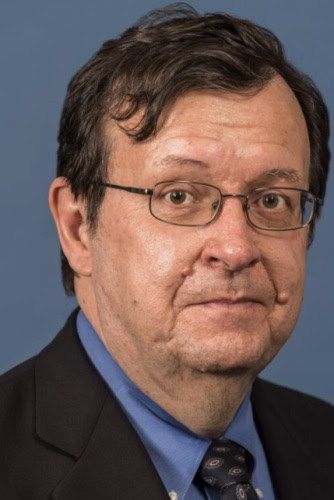
William D. (Bill) Hartung
- William D. Hartung is a Foreign Policy Advisor with the Quincy Institute for Responsible Statecraft, and his work focuses on the arms industry and US military budget. He was previously the director of the Arms and Security Program at the Center for International Policy and the co-director of the Center’s Sustainable Defense Task Force. Bill is the co-author, with Ben Freeman, of the recently released book: The Trillion Dollar War Machine: How Runaway Military Spending Drives America into Foreign Wars and Bankrupts Us at Home.
But as Bill Hartung, he performs stand-up comedy on foreign affairs and nuclear issues at comedy clubs and for special events.
Contradiction in terms? We think not…
Bill Hartung at West Side Comedy Club in New York, February, 2025
Tina Cordova at San Onofre Symposium
- One of the pleasures of attending major events is that I run into friends from the movement to abolish nukes who I otherwise don’t get to see unless it’s on Zoom. At the recent Samuel Lawrence Foundation San Onofre Symposium, one speaker was Tina Cordova. She is a Downwinder from the Trinity test and the Nevada Test Site radiation, and founded the Tularosa Basin Downwinders Consortium. She spoke about her personal experiences being a Downwinder, how the radiation exposure harmed her and decimated her family, and her then-upcoming presentation at the United Nations.
Numnutz of the Week (for Outstanding Nuclear Boneheadedness)
- A different kind of Numnutz this week, on mutations in proximity to the nuclear reactor disasters at Chernobyl and Fukushima. Kids, worms, and pigs — can the rest of us be far behind?

Newsletter
Get a Free Excerpt from Yes, I Glow In The Dark!
Join the mailing list for weekly episode alerts and Libbe's free book excerpt.